Freedom Fighters - R
Honoring the brave souls who dedicated their lives to the independence and integrity of our motherland.
Raghunath Mahato
Indian freedom fighter
Raghunath Mahato (1738–1778) was a Kudmi leader in the Chuar Revolt (1785—1800) against British rule, leading his community, while Gopal Mahato led the Kudmi people in the Manbhum region.
Raghunath Vinayak Dhulekar
Indian politician
Pandit Raghunath Vinayak Dhulekar was a prominent Indian freedom fighter, notable pleader & a social leader from Jhansi, Uttar Pradesh who took an active part in the Indian National Movement and Salt March and held many responsible positions in Indian politics including Member of the Parliament of India and Constituent Assembly in 1952.
Raja Dahir
Maharaja of Sindh from 695 to 712
Raja Dahir was the last Hindu Maharaja of Sindh from 695 to 712. A Brahmin ruler, his kingdom was invaded in 711 by the Arab Umayyad Caliphate, led by Muhammad bin Qasim, where Dahir died. According to the Chach Nama, the Umayyad campaign against Dahir was due to a pirate raid off the Sindh coast that resulted in gifts to the Umayyad caliph from the king of Serendib being stolen.

Raja Devi Bakhsh Singh
Indian Freedom Fighter
Raja Devi Bakhsh Singh was a British-era King from Gonda, Uttar Pradesh. He was born in 19th century AD. He featured in the Indian Rebellion of 1857 and is represented as symbol of religious harmony in India.

Raja Narain Singh
Raja Narain Singh was a Kakan Rajputs zamindar of Seris and Kutumba in modern-day Aurangabad district of Bihar in India. He was active during the late 18th century and was notable for rebelling against the British East India Company.

Raja Ram Mohan Roy
Indian reformer and writer (1772–1833)
Raja Ram Mohan Roy was an Indian social reformer and writer who was one of the founders of the Brahmo Sabha in 1828, the precursor of the Brahmo Samaj, a socio-religious reform movement in the Indian subcontinent. He has been dubbed the "Father of the Indian Renaissance." He was given the title of Raja by Mughal emperor Akbar II.

Rama Khandwala
India's oldest tour guide (1926–2021)
Rama Satyendra Khandwala was India's oldest tour guide and was the oldest living member of the Rani of Jhansi Regiment, formed by Subhas Chandra Bose during India's freedom movement.
Ram Charan Agarwal
Indian politician
Ram Charan Agarwal was an Indian politician and freedom fighter who served as Deputy Mayor of Delhi. He is the father of Jai Parkash Aggarwal.
Ram Ekbal Singh Warsi
Indian politician
Ram Ekbal Singh Warsi, also spelled Ram Iqbal Worsi, was an Indian freedom fighter, social thinker from Bhojpur, Bihar. Warsi was the name of his native village, which he added to his last name.

Rameshwar Banerjee
Indian revolutionary (1925–1945)
Rameshwar Banerjee was a revolutionary and martyr of the Indian independence movement. He participated in the Quit India Movement in 1942.
Ram Narayan Chaudhary
Indian freedom fighter and social reformer (1895–1989)
Ram Narayan Chaudhary was a Gandhian social reformer, anti-colonial nationalist, writer, and publisher, from Rajasthan in India who contributed over three decades of his life to the Indian independence movement.

Ram Naresh Kushwaha
Indian politician
Ram Naresh Kushwaha was an Indian social activist, politician, and writer of Hindi literature, who served as a Member of Parliament (1977). In Uttar Pradesh, he held organizational positions under the Socialist Party, Praja Socialist Party, Samyukta Socialist Party, and Bhartiya Lok Dal during his political career (1964-1997).
Ram Nath Puri
Ram Nath Puri was an Indian-American freedom fighter best known as the editor of Circular-i-Azadi, a publication critical of the British Raj, often linked to the early history of the Ghadar Party.
Rana Beni Madho
Leader of the Indian rebellion of 1857
Rana Beni Madho or Beni Madho Baksh Singh Bais was an important leader in the Indian rebellion of 1857 from the Oudh region. He belonged to the Bais clan of Rajputs and was the ruler of the Shankarpur estate in modern-day Rae Bareli, part of the old Baiswara region in Oudh. He led a rebellion against the British forces in 1857. His son was married to the granddaughter of another prominent revolutionary leader Kunwar Singh of Jagdishpur estate.

Rana Kumbha
Maharana of Mewar from 1433 to 1468
Kumbhakaran Singh (1417–1468), popularly known as Maharana Kumbha, was the ruler of the Kingdom of Mewar in medieval India. He belonged to the Sisodia clan which is a cadet Branch of Guhila Rajputs. It was during his reign that Mewar became one of the most powerful political powers in northern India. He is considered to be one of the most powerful ruler of his time in South Asia.

Rana Sanga
Maharana of Mewar from 1509 to 1528
Sangram Singh I, most commonly known as Rana Sanga, was the Maharana of Mewar from 24 May 1509 until his death in 1528. A member of the Sisodia dynasty, he controlled parts of present-day Rajasthan, Gujarat, Madhya Pradesh, Haryana, Sindh, and Uttar Pradesh from his capital at Chittorgarh.
Rani Abbakka Chowta
Loading biography...
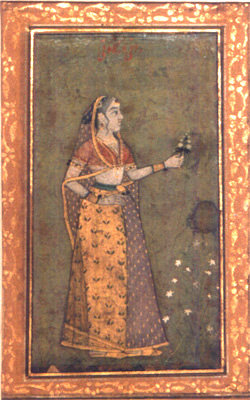
Rani Durgavati
Queen Regent of Gondwana (1524:-1564)
Durgavati, popularly known as Durgavati Chandel and Rani Durgavati, was the regent queen of Gondwana during her son Vir Narayan infancy from 1550 to 1564 AD. She married a Kachhwaha King named Dalpat Shah, the adopted son of the Gond King Sangram Shah. She is mainly remembered for her courage and sacrifice against the Mughal invasion of Gondwana.
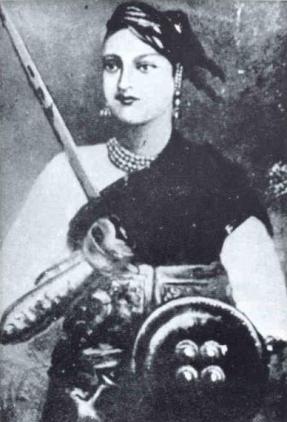
Rani Lakshmibai
Prominent leader of the 1857 Indian rebellion
The Rani of Jhansi, also known as Rani Lakshmibai, was one of the leading figures of the Indian Rebellion of 1857. The queen consort of the princely state of Jhansi from 1843 to 1853, she assumed its leadership after the outbreak of the conflict and fought several battles against the British. Her life and deeds are celebrated in modern India and she remains a potent symbol of Indian nationalism.

Rao Gopal Dev
Revolutionary leader in 19th century India
Raja Rao Gopaldev, also known as Rao Gopaldev Singh (1829–1862) was the son of Rao Nathuram Singh of Rewari.

Rao Gopal Singh Kharwa
Gopal Singh Rathore (1872–1939), born in what is now Rajasthan, was the ruler of the Kharwa state of Rajputana. He was sentenced to four years of imprisonment in the Todgarh Fort located approximately 70 kilometres (43 mi) from Beawar for organising a revolt against the British.
Rasammah Bhupalan
Malaysian freedom fighter, teacher and social activist (1927–2025)
Rasammah Bhupalan, also known as Rasammah Naomi Navarednam or F. R. Bhupalan, was a Malaysian independence and social activist of Tamil origin.
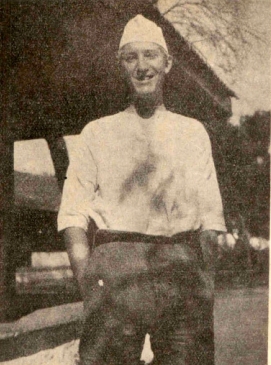
Reginald Reynolds
Reginald Arthur Reynolds was a British left wing writer, poet, a Quaker and an anti-colonial activist who collaborated with M.K. Gandhi and Horace Alexander.
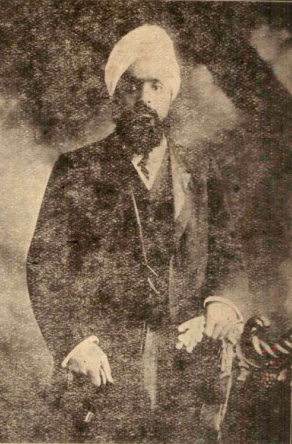
Ripudaman Singh
Maharaja of Nabha from 1911–1928
Maharaja Ripudaman Singh, later known as Sardar Gurcharan Singh, was the Maharaja of Nabha State, a small princely state during the British Raj, from 1911 to 1928, when he was deposed by the British. He later became an Indian revolutionary.

Rowlatt Act
Government act passed in 1919 by the British in India
The Anarchical and Revolutionary Crimes Act of 1919, popularly known as the Rowlatt Act, was a law, applied during the British India period. It was a legislative council act hurriedly passed by the Imperial Legislative Council in Delhi on 18 March 1919, despite the united opposition of its Indian members, indefinitely extending the emergency measures of preventive indefinite detention, imprisonment without trial and judicial review enacted in the Defence of India Act 1915 during the First World War. It was enacted in the light of a perceived threat from revolutionary nationalists of re-engaging in similar conspiracies as had occurred during the war which the Government felt the lapse of the Defence of India Act would enable.