Freedom Fighters - G
Honoring the brave souls who dedicated their lives to the independence and integrity of our motherland.
Gam Malludora
Indian politician and tribal leader
Gam Malludora (1900–1969) was an Indian politician and tribal leader who served as a Member of Parliament from Visakhapatnam Lok Sabha constituency. He was born in [Nadimpalem] village Koyyuru mandal of Visakhapatnam district, Andhra Pradesh, in 1900, his belongings to Bagata tribal community. He was the younger brother of Gam Gantamdora. Their father was Gam Boggudora.
Ganda Singh
Indian activist
Ganda Singh, whose home town was Ferozepur in India, was a prominent member of the Ghadar Party. He spent some time in Hankou, China, where he met Chiang Kai-shek. in 1926, and M. N. Roy, in 1927. On the occasion of the visit of the former, he was reported to have made an anti-British speech, whilst he participated in the reception for Roy's visit to the Sikh gurdwara that formed a hub for Ghadarite activity. Singh was then on the staff of the Hindustan Ghadar Dhandora. He moved to Nanking in October 1927, where he worked as editor of the Hindustan Ghadar Dhandora and also managed a branch of the Eastern Oppressed Peoples Association. He was joined in his 1927 move to Nanking by Arjun Singh and Udham Singh, and by others in 1929. Thereafter, he was among a group of Ghadar Party leaders who were deported from the country.

Gandhi cap
White coloured sidecap, pointed in front and back and having a wide band, worn in India
The Gandhi cap is a white sidecap, pointed in front and back and having a wide band. It is made out of khadi. It takes its name after the Indian leader Mahatma Gandhi, who created it and first popularised its use during the Indian independence movement.
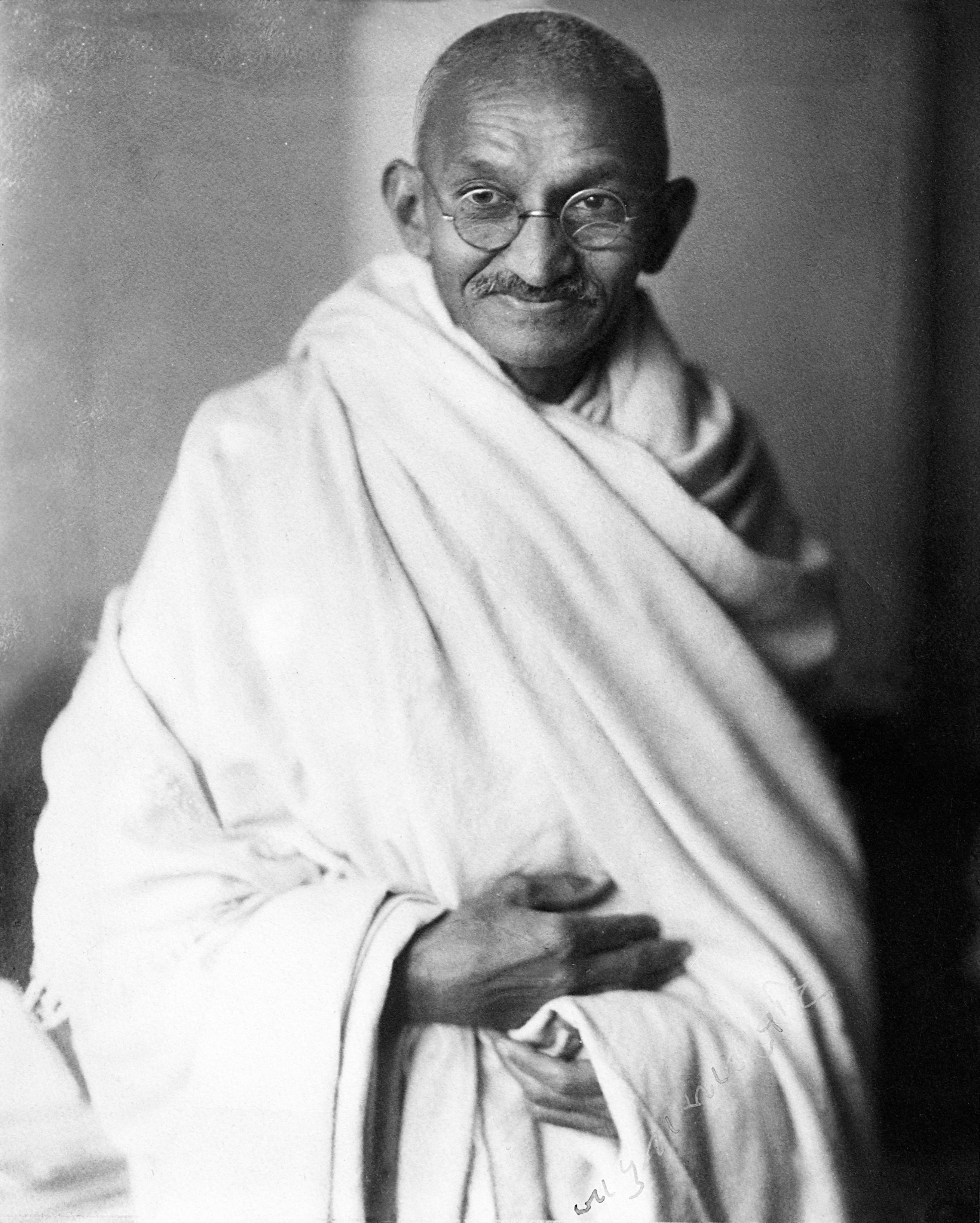
Gandhi–Irwin Pact
1931 agreement between Mahatma Gandhi and the Viceroy of India, Irwin
The Gandhi–Irwin Pact was a political agreement signed by Mahatma Gandhi and Lord Irwin, Viceroy of India, on 5 March 1931 before the Second Round Table Conference in London. Before this, Irwin, the Viceroy, had announced in October 1929 a vague offer of 'dominion status' for India in an unspecified future and a Round Table Conference to discuss a future constitution. The Second Round Table Conference was held from September to December 1931 in London. This conference marked the end of the Civil Disobedience Movement in India.

Ganesh Damodar Savarkar
Hindutva activist (1879–1945)
Ganesh Damodar Savarkar, also known as Babarao Savarkar, was an Indian Hindutva activist. He was the founder of the Abhinav Bharat Society along with Vinayak Damodar Savarkar, his younger brother. He was a political prisoner twice; first from 1909-1922 ; and second from 1933-1937. Both times he was unconditionally released.
Ganesh Vasudeo Joshi
British Indian lawyer, social reformer and activist (1828-1880)
Ganesh Vasudeo Joshi, popularly known as Sarwajanik Kaka, was a lawyer, social reformer, and political activist. He was a founding member of Poona Sarvajanik Sabha. He was a great support system for the noble works initiated and carried out successfully by Honorable Justice Mahadev Govind Ranade. He was a social activist in Pune when Maharashtrian revival began, and he was the elderly guiding philosopher when Tilak and Agarkar's generation gave impetus to Indian independence struggle. Joshi also represented Vasudev Balwant Phadke as his lawyer in Phadke's trial.

Gangadhar Adhikari
Indian Marxist theoretician (1898–1981)
Dr. Gangadhar Adhikari was a prominent Marxist theoretician and prolific writer from India. He was the former general secretary of the Communist Party of India (CPI), one of the oldest political parties in India. He was a chemical scientist who earned his Ph.D. degree in Berlin in 1927.

Gangu Baba
Indian folk heroes
Ganga Baba was a participant in Indian Rebellion of 1857. He was born in Bithoor village of Uttar Pradesh.

Garam dal
Faction of the Indian National Congress
The Indian National Congress was formed in 1885, in 1907 it split into two faction, extremists — Garam Dal led by Bal Gangadhar Tilak and moderates Naram Dal led by Gopal Krishna Gokhale. They were termed so because of their attitude towards the British rule. The Garam Dal is considered as a triumvirate comprising apart from Tilak, Lala Lajpat Rai and Bipinchandra Pal. According to Bhatt and Bhargava, the differences between the two factions of the Congress paralyzed it, due to which "the agitation for independence ran out of steam and it remained so till the end of the first world war". The Naram Dal of the Congress helped the British in its war effort, on the other hand the Garam Dal led by Tilak and Annie Besant started the Home Rule League agitation in 1917. Asghar Ali Engineer writes that the Garam Dal separated itself from the Congress, after the differences that came to fore during the Congress session of Surat in 1907. Motilal Nehru until 1915, was a follower of the moderates, however under persuasion of his son Jawaharlal Nehru, his politics led him to join the Garam Dal.

Garib Das
Saint (1717-1778)
Sant Garibdas, was an 18th century Hindu spiritual leader, Saint-poet and reformer, and the founder of Garibdasi Sampradaya.
Gauriram Gupta
Indian Independence activist
Gauriram Gupta was an Indian Independence activist and politician and member of First Legislative Assembly of Uttar Pradesh. He was three-time Member of Legislative Assembly from 1952–1957, and 1967–1969, represented Pharenda. He died at the age of 78. MLA Pyari Devi Agrahari was his wife.

Genda Lal Dixit
Indian revolutionary
Genda Lal Dixit was an Indian revolutionary who worked as a school-teacher at Auraiya in the district of Etawah, United Provinces, British India. He led a group of Indian freedom fighters (revolutionaries), known as the Shivaji Samiti, who engaged in subversive activities against the British Raj. As a consequence of their involvement in the Mainpuri Conspiracy of 1918, Dixit was arrested and imprisoned first at Agra fort and later at Mainpuri. He managed to escape from prison with the help of Pandit Dev Narayan Bhartiya and latter died on 21 December 1920 in a government hospital at Delhi.
Ghadar Mutiny
1915 plan to initiate a pan-Indian mutiny in the British Indian Army
The Ghadar Mutiny, also known as the Ghadar Conspiracy, was a plan to initiate a pan-India mutiny in the British Indian Army in February 1915 to end the British Raj in India. The plot originated at the onset of World War I, between the Ghadar Party in the United States, the Berlin Committee in Germany, the Indian revolutionary underground in British India and the German Foreign Office through the consulate in San Francisco. The incident derives its name from the North American Ghadar Party, whose members of the Punjabi community in Canada and the United States were among the most prominent participants in the plan. It was the most prominent amongst a number of plans of the much larger Hindu–German Mutiny, formulated between 1914 and 1917 to initiate a Pan-Indian rebellion against the British Raj during World War I. The mutiny was planned to start in the key state of Punjab, followed by mutinies in Bengal and rest of India. Indian units as far as Singapore were planned to participate in the rebellion. The plans were thwarted through a coordinated intelligence and police response. British intelligence infiltrated the Ghadarite movement in Canada and in India, and last-minute intelligence from a spy helped crush the planned uprising in Punjab before it started. Key figures were arrested, and mutinies in smaller units and garrisons within India were also crushed.
Giani Pritam Singh Dhillon
Giani Pritam Singh Dhillon was an Indian freedom fighter and Sikh missionary who, as a member of the Ghadar Party, was instrumental in the planning of the failed 1915 Ghadar conspiracy in the British Indian Army. Giani Pritam Singh Dhillon was a close friend of Gurbaksh Singh Dhillon, famous Sikh Indian independence movement leader and prominent member of the Indian National Army. He was also close associate of Subhas Chandra Bose. Pritam Singh is also remembered for reviving the same idea during World War II by seeking Japanese support in the establishment of what came to be the Indian National Army. Pritam Singh died in a plane crash in 1942.
Goa liberation movement
Movement in Goa fought to end Portuguese colonial rule in Goa
The Goa liberation movement was a movement which fought to end Portuguese colonial rule in Goa, Portuguese India. The movement built on the small scale revolts and uprisings of the 19th century, and grew powerful during the period 1940–1961. The movement was conducted both inside and outside Goa, and was characterised by a range of tactics including nonviolent demonstrations, revolutionary methods and diplomatic efforts. However, Portuguese control of its Indian colonies ended only when India invaded and annexed Goa in 1961. This caused a mixture of worldwide acclaim and condemnation.

Godavari Parulekar
Indian social activist (1907–1996)
Godavari Parulekar was a freedom fighter, writer, and social activist. She was influenced by Marxist and Communist ideologies and spent her life fighting for the farmers and working class. She was married to Shamrao Parulekar, another freedom fighter and activist with the same ideologies.

Gopal Krishna Gokhale
Indian political leader and social reformer (1866–1915)
Gopal Krishna Gokhale was an Indian political leader and a social reformer during the Indian independence movement, and political mentor of Indian freedom fighter Mahatma Gandhi. Gokhale was a senior leader of the Indian National Congress and the founder of the Servants of India Society. Through the Society as well as the Congress and other legislative bodies he served in, Gokhale campaigned for Indian self-rule and social reforms. He was the leader of the moderate faction of the Congress that advocated reforms by working with existing government institutions, and a major member of the Poona Association or the Poona Sarvajanik Sabha.

Govind Rao Khare
Indian freedom fighter from Maharashtra
Naik Govind Rao Khare was the Subedar of the hill fort Ratangarh under Peshwa government in the Maratha Empire. He was born in a farming family of Maharashtra. Khare was a revolutionary of the Indian independence movement who took up arms against the British rule in Maharashtra and declared the end of British rule. he was chief of the Kolis of Khare (Khade) clan and belong to the Mahadev koli family and led the rebellion from 1819 to 1830. his family was chief of the four villages and was tributary to peshwa and enjoying the Deshmukhi.
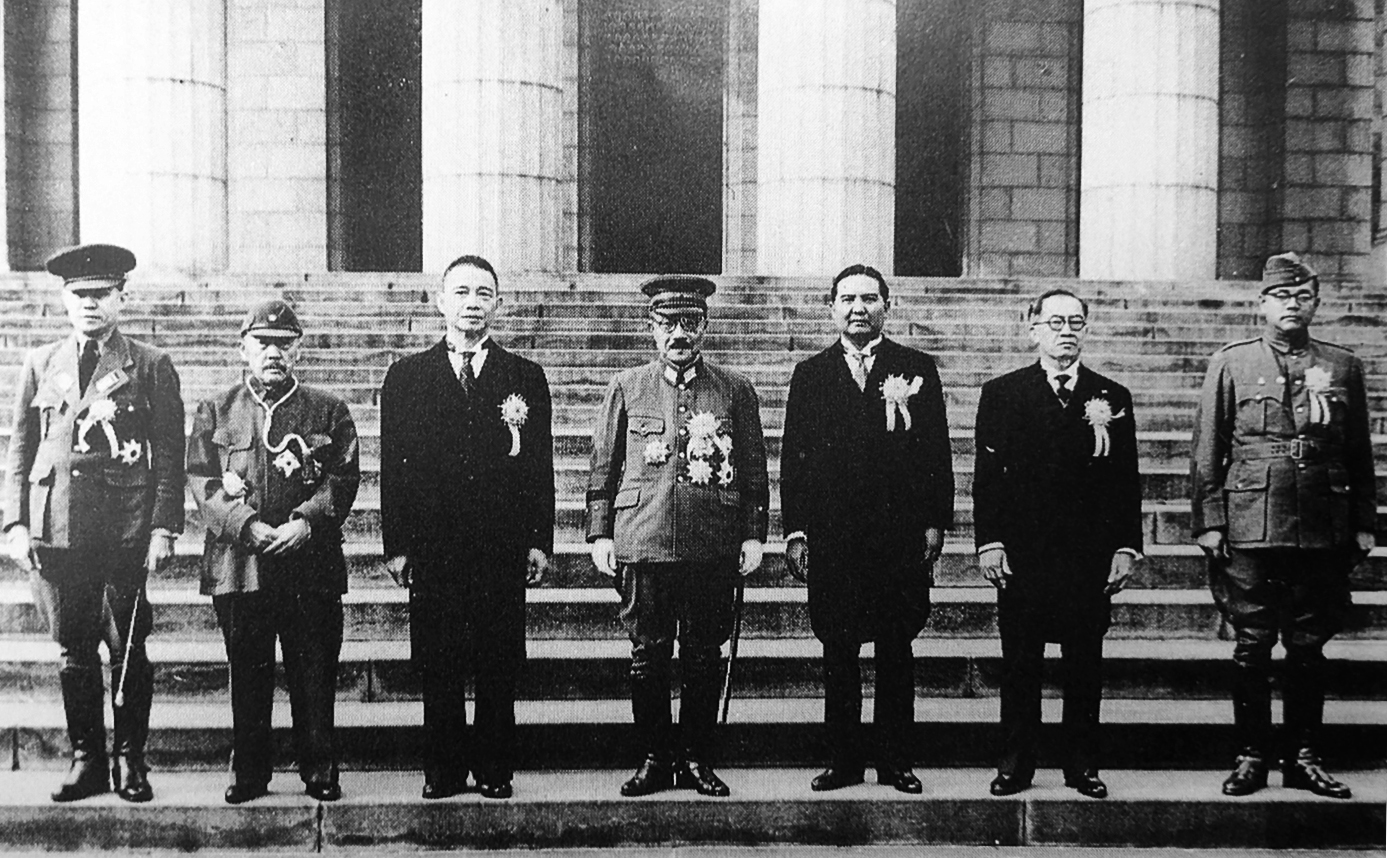
Greater East Asia Conference
International conference held in 1943
The Greater East Asia Conference was an international summit held in Tokyo from 5 to 6 November 1943, in which the Empire of Japan hosted leading politicians of various component parts of the Greater East Asia Co-Prosperity Sphere. The event was also referred to as the Tokyo Conference.

Great Trial of 1922
The Great Trial of 1922 took place in March 1922 following the arrest of Mohandas K. Gandhi for sedition. He appeared in the Ahmedabad court, charged under section 124A of the Indian Penal Code, without counsel. He pleaded guilty to all charges and requested that he be given the maximum penalty.
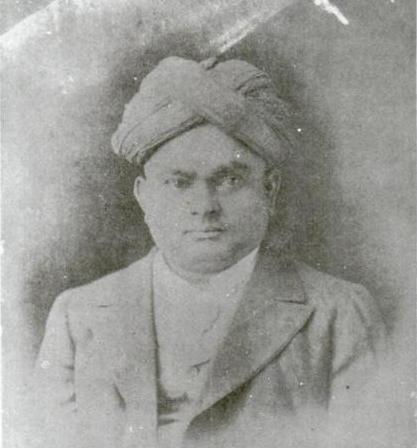
G. Subramania Iyer
Indian journalist, social reformer and freedom fighter
Ganapathy Dikshitar Subramania Iyer was a leading Indian journalist, social reformer and freedom fighter who led the Triplicane Six in launching The Hindu, an English newspaper on 20 September 1878. He was proprietor, editor and managing director of The Hindu from 20 September 1878 to October 1898. The Tamil language newspaper 'Swadesamitran' was also founded by him in 1891.

Guddemane Appaiah Gowda
Indian freedom fighter (c. 1792–1837)
Guddemane Appaiah Gowda was an Indian rebel, he instated a peasant army from Kodagu and became its commander in-chief to lead the Amara Sullia Rebellion in 1837. His great grandson Sujith Guddemane is prominent lawyer from Sullia, practising before the High Court of Karnataka. They were successful in hoisting the native flag after lowering the Union Jack, which is known to be the first-ever freedom movement against the East India Company. They established a civil government in Mangalore for 13 days under his leadership.
Gunanand Dangwal
Indian freedom fighter
Gunanand Dangwal, better known by his nom de plume Pathik was an Indian freedom fighter who played a leading role in the Tehri uprising.
Gunda Dhur
Indian tribal leader
Gunda Dhur was a tribal leader from village Nethanar in Jagdalpur tehsil, of Bastar district, in present-day Chhattisgarh. He played a major role in 1910 rebellion of the Dhurwas of Kanger forest in Bastar, and led the rebellion. He is considered as a hero by many tribals of Bastar.He was one of the prominent leaders who lead the Bastar rebellion, however gunda dhur was never captured by Britisher's, gunda dhur can also be seen as a prominent leader in 1910 rebellion, the 1910 rebellion occur in india on the issue of reservation by the Britisher's, reservation was a big problem for the tribal people, taking their land and displacing them out of their mother village, and the wrath among the people's of the village led to the rebellion of 1910.
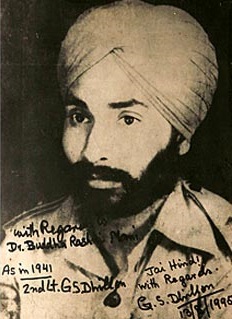
Gurbaksh Singh Dhillon
Officer in the Indian National Army (1914–2006)
Gurbaksh Singh Dhillon was an Indian military officer of the Indian National Army (INA). He faced charges of "waging war against His Majesty the King Emperor" due to his pivotal role in the Indian independence movement. For his contributions, he was awarded the Padma Bhushan, the third-highest civilian honour of the Republic of India.

Guru Gobind Singh
Tenth Sikh guru from 1675 to 1708
Guru Gobind Singh was the tenth and last human Sikh Guru. He was a warrior, poet, and philosopher. In 1675, at the age of nine, he was formally made the leader of the Sikhs after his father Guru Tegh Bahadur—the ninth Sikh Guru—was executed by the emperor Aurangzeb. His four biological sons died during his lifetime—two in battle and two executed by the Mughal administrator Wazir Khan.