Freedom Fighters - H
Honoring the brave souls who dedicated their lives to the independence and integrity of our motherland.

Hafiz Ahmad Jaunpuri
Indian Islamic scholar
Ḥāfiẓ Aḥmad Jaunpūrī was an Indian Muslim scholar, religious preacher and social worker. As the son and successor of Karamat Ali Jaunpuri, he led the Taiyuni reformist movement in Bengal.
Hafizur Rahman Wasif Dehlavi
Indian Muslim scholar
Hafizur Rahman Wasif Dehlavi was an Indian Muslim scholar, jurist, literary critic, and a poet of the Urdu language, who served as the rector of Madrasa Aminia from 1955 to 1979. He participated in the Indian freedom struggle movement and authored books such as Adabī bhūl bhulayyān̲, Urdū Masdar Nāmā and Taz̲kirah-yi Sā'il. He compiled the religious edicts of his father Kifayatullah Dehlawi as Kifāyat al-Mufti in nine volumes.
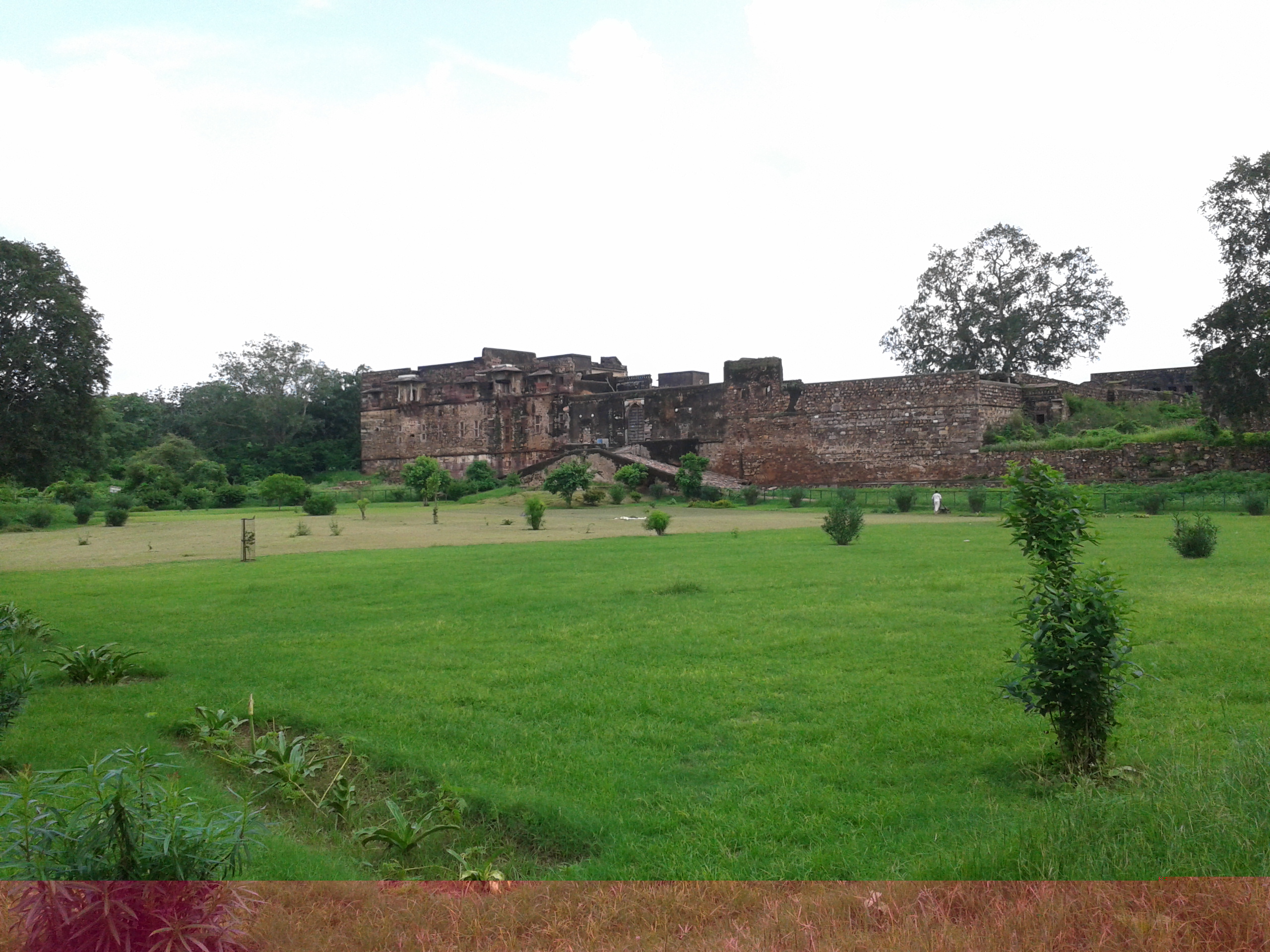
Hammiradeva
King of Ranastambhapura from 1283 to 1301
Hammiradeva, also known as Hammir Dev Chauhan in vernacular legends, was the last ruler of Ranasthambhpura (Ranthambore) from the Chahamana dynasty. He is popularly known for the resistance against the Khalji expansion in the Rajputana region.

Har Dayal
Indian revolutionary (1884–1939)
Lala Har Dayal Mathur was an Indian nationalist revolutionary and freedom fighter. He was a polymath who turned down a career in the Indian Civil Service. His simple living and intellectual acumen inspired many expatriate Indians living in Canada and the U.S. in their campaign against British rule in India during the First World War.

Harihara I
Emperor of Vijayanagara from 1336 to 1355
Harihara I, also called Hakka and Vira Harihara I, was the founder of the Vijayanagara Empire, in present-day Karnataka, India, which he ruled from 18 April 1336 until his death on 20 November 1355. He and his successors formed the Sangama dynasty, the first of four dynasties to rule the empire. He was the eldest son of Bhavana Sangama, the chieftain of a cowherd pastoralist community, who claimed Shepherd descent.

Hasrat Mohani
Indian freedom fighter and poet of the Urdu language
Syed Fazl-ul-Hasan, known by his pen-name Hasrat Mohani, was an Indian independence activist and a poet in Urdu. Together with Swami Kumaranand, he is regarded as the first person to demand complete independence for India in 1921 at the Ahmedabad Session of Congress. Maghfoor Ahmad Ajazi supported the complete independence motion demanded by Hasrat Mohani. He wrote the ghazal "Chupke chupke raat din".

Hemen Gupta
Indian film director and producer
Hemen Gupta was an Indian film director, producer and screenwriter in Hindi language films and Bengali language films.

Hifzur Rahman Seoharwi
Indian independence activist (1900–1962)
Hifzur Rahman Seoharwi was an Indian Sunni Islamic scholar and an activist of the Indian independence movement, who served as the fourth general secretary of the Jamiat Ulama-e-Hind. He fought against British rule for 25 years (1922-1947) and spent eight years in jail. As a politician, he opposed the partition of India, and served as a member of the Indian Parliament for the Indian National Congress from Amroha Lok Sabha constituency from 1952 to 1962.

Hijli Detention Camp
Detention camp of British India
Hijli Detention Camp, is a former detention camp operated during the period of British colonial rule in India. It is located in Hijli, beside Kharagpur, in the district of Midnapore West, West Bengal, India.
Hindavi Swarajya
Hindu nationalistic term of historical significance
Hindavi Swarajya is a term attributed to Shivaji, the founder of the Maratha Kingdom. After Shivaji's death, the term swarajya came into widespread use, without "Hindavi" but rather associated with "Maratha". According to André Wink, the term Maratha Swarajya meant a form of zamindari sovereignty, not necessarily attached to any particular territory.
Hindu–German Conspiracy
1914–1917 plan for pan-Indian rebellion against the British Raj during WWI
The Hindu–German Conspiracy[note] were a series of attempts between 1914 and 1917 by Indian nationalist groups to create a pan-Indian rebellion against the British Empire during World War I. This rebellion was formulated between the Indian revolutionary underground and exiled or self-exiled nationalists in the United States. It also involved the Ghadar Party, and in Germany the Indian independence committee in the decade preceding the Great War. The conspiracy began at the start of the war, with extensive support from the German Foreign Office, the German consulate in San Francisco, and some support from Ottoman Turkey and the Irish republican movement. The most prominent plan attempted to foment unrest and trigger a Pan-Indian mutiny in the British Indian Army from Punjab to Singapore. It was to be executed in February 1915, with the aim to overthrow British rule in the Indian subcontinent. The February mutiny was ultimately thwarted when British intelligence infiltrated the Ghadarite movement and arrested key figures. Mutinies in smaller units and garrisons within India were also crushed.
Hindu–German Conspiracy Trial
1917 U.S. federal trial of Indian nationalist conspirators
The Hindu–German Conspiracy Trial commenced in the U.S. District Court in San Francisco on November 12, 1917, following the uncovering of the Hindu–German Conspiracy for initiating a revolt in British India. It was part of a wave of such incidents which took place in the United States after its entrance into World War I. The trials came after pressure from the United Kingdom to suppress the Indian independence movement abroad.

Hindu–Muslim unity
Religiopolitical concept in the Indian subcontinent
Hindu–Muslim unity is a religiopolitical concept in the Indian subcontinent which stresses members of the two largest faith groups there, Hindus and Muslims, working together for the common good. The concept was championed by various persons, such as leaders in the Indian independence movement, namely Mahatma Gandhi and Khan Abdul Ghaffar Khan, as well as by political parties and movements in British India, such as the Indian National Congress, Khudai Khidmatgar and All India Azad Muslim Conference. Those who opposed the partition of India often adhered to the doctrine of composite nationalism.
Hindustan Zindabad
Indian patriotic slogan
Hindustan Zindabad is a originally Persian phrase and battle cry most commonly used in the Republic of India in speeches and communications pertaining to or referring to patriotism towards India, and has been used since the British Raj in the colonial India. It translates to "Long Live India". It is a nationalistic slogan, and has been used in nationalist protests such as radical peasant movements in post-colonial India. Another variation of the slogan is Jai Hind. Such slogans are common while cheering the Indian team in cricket matches.

History of the Indian National Congress
The Indian National Congress was established when 72 representatives from all over the country met at Bombay in 1885. Prominent delegates included Dadabhai Naoroji, Surendranath Banerjee, Badruddin Tyabji, Pherozeshah Mehta, W. C. Banerjee, S. Ramaswami Mudaliar, S. Subramania Iyer, and Romesh Chunder Dutt. The Englishman Allan Octavian Hume, a former British civil servant, was one of the founding members of the Indian National Congress.
History of the salt tax in British India
Taxation of salt has occurred in India since the earliest times. However, this tax was greatly increased when the British East India Company began to establish its rule over provinces in India. In 1835, special taxes were imposed on Indian salt to facilitate its import. This paid huge dividends for the traders of the British East India Company. When the Crown took over the administration of India from the Company in 1858, the taxes were not revoked.
Home rule
Governance of a colony, dependent country, locality, or region by its own citizens
Home rule is the government of a colony, dependent country, or region by its own citizens. It is thus the power of a part of a state or an external dependent country to exercise such of the state's powers of governance within its own administrative area that have been decentralized to it by the central government. Home rule may govern in an autonomous administrative division; in contrast, though, there is no sovereignty separate from that of the parent state, and thus no separate chief military command nor separate foreign policy and diplomacy.
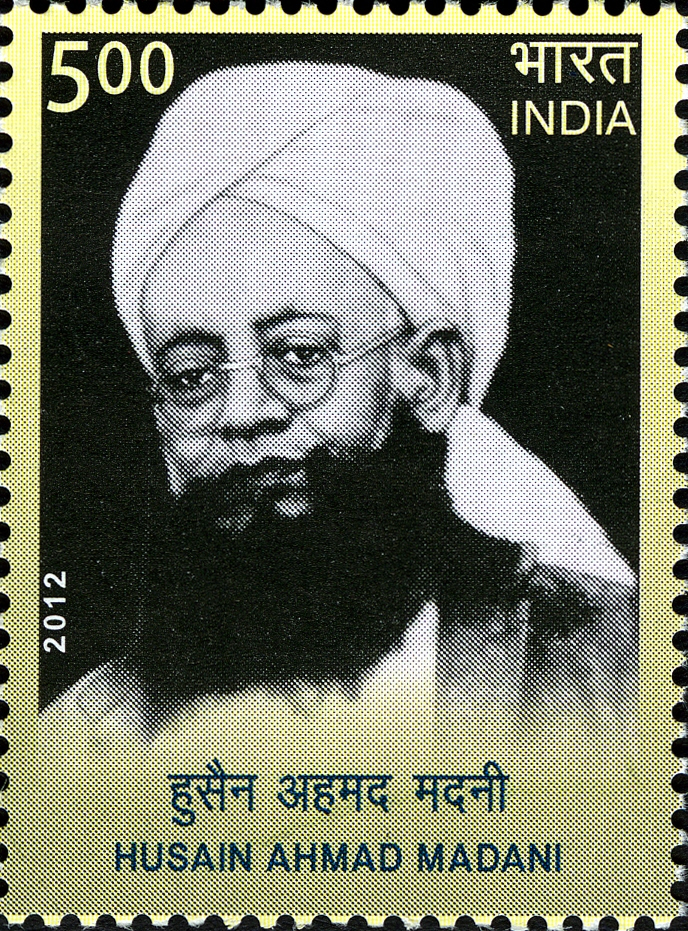
Hussain Ahmad Madani
Indian Islamic scholar and independence activist (1879–1957)
Syed Hussain Ahmad Madani was an Indian Islamic scholar, serving as the principal of Darul Uloom Deoband in Uttar Pradesh. He was among the first recipients of the civilian honour of Padma Bhushan in 1954.
Hyderabad State Congress
1938–1948 political party in Hyderabad
The Hyderabad State Congress was a political party in the princely state of Hyderabad that sought civil rights, representative democracy and the union of Hyderabad with the Republic of India. It opposed the autocratic rule of the Nizam of Hyderabad and the militancy of the Razakars. HSC was formed in 1938.