Freedom Fighters - A
Honoring the brave souls who dedicated their lives to the independence and integrity of our motherland.

Abdul Ghaffar Khan
South Asian politician and anti-colonial activist (1890–1988)
Khan Abdul Ghaffar Khan, also known as Bacha Khan and Badshah Khan, was an Indian independence activist from the North-West Frontier Province, and founder of the Khudai Khidmatgar resistance movement against British rule in colonial India. After the partition occurred, he became a Pakistani politician and led the Azad Party.

Abdul Habeeb Yusuf Marfani
Muslim businessman and philanthropist from India
Abdul Habeeb Yusuf Marfani was a Gujarati Muslim businessman and philanthropist from Dhoraji, Saurashtra, who made significant contributions to the Indian National Army (INA) led by Subhas Chandra Bose during India’s struggle for independence. He is best known for donating his entire fortune, approximately ₹1 crore, to the INA in 1944, earning him the Sevak-e-Hind medal, the highest civilian honour of the Azad Hind government.
Abdul Matin Chowdhury
Bangladeshi academic and physicist
Abdul Matin Chowdhury was a Bangladeshi academic and physicist. He served as the 15th Vice-chancellor of the University of Dhaka.
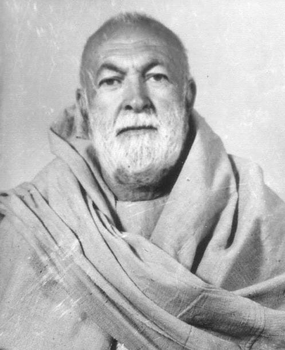
Abdul Samad Khan Achakzai
Pashtun nationalist and political leader (1907–1973)
Abdul Samad Khan Achakzai, commonly known as Khan Shaheed was a Pashtun nationalist and political leader from the then British Indian province of Baluchistan. He founded the Anjuman-i-Watan Baluchistan, which was allied with the Indian National Congress.
Abdur Rauf Danapuri
Indian Islamic scholar and political figure (d. 1948)
Abu al-Barakat Abdur Rauf Danapuri was an Islamic scholar, writer, physician, and political figure from British India. He was involved in religious scholarship, social work, and the Indian independence movement.

A. C. N. Nambiar
Indian Nationalist and friend and colleague of Subhas Chandra Bose
Arathil Candeth Narayanan Nambiar was an Indian Nationalist and a friend and colleague of Subhas Chandra Bose. Originally from Thalassery, Kannur, Kerala, Nambiar spent much of his life serving the Indian independence movement in Europe.
Adi Dharm
Religious movement from mid-19th century Bengal
Adi Dharm refers to the religion of Adi Brahmo Samaj the first development of Brahmoism and includes people of the Sadharan Brahmo Samaj who were reintegrated into Brahmoism after the second schism of 1878 at the instance of Devendranath Tagore. This was the first organised casteless movement in British India and reverberated from its heart of Bengal to Assam, Bombay State, Punjab and Madras, Hyderabad, and Bangalore.

Agnes Smedley
American journalist and writer
Agnes Smedley was an American journalist, writer and activist who supported the Indian Independence Movement and the Chinese Communist Revolution. Raised in a poverty-stricken miner's family in Missouri and Colorado, she dramatized the formation of her feminist and socialist consciousness in the autobiographical novel Daughter of Earth (1929).
Ahmad Saeed Dehlavi
Indian Muslim scholar (d. 1959)
Ahmad Saeed Dehlavi was an Indian Muslim scholar and freedom struggle activist who served as the first general secretary and the fifth president of Jamiat Ulama-e-Hind. He also served as the third rector of Madrasa Aminia and authored books such as Fear of Hell and Key to the Garden of Bliss.
Ahmadullah Shah
Leader of the Indian Rebellion of 1857 (1787–1858)
Ahmadullah Shah famous as the Maulvi of Faizabad, was a famous freedom fighter and leader of the Indian Rebellion of 1857. Maulavi Ahmadullah Shah was known as the lighthouse of the rebellion in the Awadh region. British officers like George Bruce Malleson and Thomas Seaton made mentions about the courage, valour, personal and organizational capabilities of Ahmadullah. G. B. Malleson mentions Ahmadullah repeatedly in the History of Indian Mutiny, a book written in 6 volumes covering Indian revolt of 1857. Thomas Seaton describes Ahmadullah Shah as:A man of great abilities, of undaunted courage, of stern determination, and by far the best soldier among the rebels.
Ahmaq Phaphoondvi
Indian Urdu writer and freedom fighter
Ahmaq Phaphoondvi (1895-1957) was the alias of Mohammad Mustafa Khan, an Indian Urdu poet, linguist, and freedom fighter. He is known for his contributions to literature, especially his satirical ghazals targeting the British Government of India. Phaphoondvi spent many years in the Aligarh jail for his active participation in the struggle for independence, including the Swaraj Movement and his association with the Indian National Congress.
Ahmed Ali Badarpuri
Indian Islamic scholar and activist
Ahmed Ali Badarpuri, also known as Ahmed Ali Banskandi and Ahmed Ali Assami, was an Indian Islamic scholar, a Sufi, a freedom fighter, and a teacher. He was the president of the Assam State Jamiat Ulama-e-Hind for 44 years.

Akbar
Mughal emperor from 1556 to 1605
Akbar, also known as Akbar the Great, was the third Mughal emperor, who reigned from 1556 to 1605. Akbar succeeded his father, Humayun, under a regent, Bairam Khan, who helped the young emperor expand and consolidate Mughal domains in the Indian subcontinent. He is generally considered one of the greatest emperors in Indian history and led a successful campaign to unify the various kingdoms of Hindūstān or India proper.

A.K. Golam Jilani
Bengali revolutionary
A. K. Golam Jilani was a Bengali revolutionary of the Indian independence movement from the Nawabganj Upazila, Dhaka in present-day Bangladesh.
Akshay Ramanlal Desai
Indian sociologist (1915–1994)
Akshay Ramanlal Desai was an Indian sociologist, Marxist and a social activist. He was Professor and Head of the Department of Sociology in University of Bombay in 1967. He is particularly known for his work Social Background of Indian Nationalism in which he offered a Marxist analysis of the genesis of Indian nationalism making use of history, which set a path to build socialism in India.

Ali Adil Shah II
Sultan of Bijapur from 1656 to 1672
Ali Adil Shah II was the 8th Sultan of Bijapur. He succeeded to the throne of Bijapur through the efforts of the Prime Minister Khan Muhammad and the Queen, Badi Sahiba, sister of Qutb Shah of Golkonda on the death of Mohammed Adil Shah of Bijapur on 4 November 1656.

Allan Octavian Hume
British political reformer, civil servant, and naturalist (1829–1912)
Allan Octavian Hume, CB ICS was a British political reformer, ornithologist, civil servant and botanist who worked in British India and was the founding spirit and key founder of the Indian National Congress. He was a proponent of Indian self-rule and strongly supported the idea of Indian independence. He supported the idea of self-governance by Indians. A notable ornithologist, Hume has been called "the Father of Indian Ornithology" and, by those who found him dogmatic, "the Pope of Indian Ornithology".
All India States Peoples Conference
Political movements in the British Raj
The All India States Peoples Conference (AISPC) was a conglomeration of political movements in the princely states of the British Raj, which were variously called Praja Mandals or Lok Parishads. The first session of the organisation was held in Bombay in December 1927. The Conference looked to the Indian National Congress for support, but Congress was reluctant to provide it until 1939, when Jawaharlal Nehru became its president, serving in this position till 1946. After the Indian Independence, however, the Congress distanced itself from the movement, allying itself with the princely rulers via its national government's accession relationships.
All Parties Conference
Group drafting the 1928 Indian constitution
The All Parties Conference was a group of Indian political parties known for organizing a committee in opposition to the Simon Commission to author the Constitution of India after independence was actualized. It was chaired by Dr. M. A. Ansari.

Allu Ramalingaiah
Indian actor, comedian and film producer (1922–2004)
Allu Ramalingaiah was an Indian character actor, comedian, and producer known for his works in Telugu cinema. In 1990, he was honoured with the Padma Shri for his contribution to Indian cinema. In 1998, he received the Filmfare Lifetime Achievement Award - South, and the Raghupathi Venkaiah Award in 2001. Ramalingaiah appeared in over 1000 films in a variety of roles. The "Allu Ramalingaiah National Award" was instituted in his memory by the "Allu Ramalingaiah Academy of Arts". The award is presented every year to a Telugu film personality for lifetime achievement. He is the father in law of Telugu hero Chiranjeevi. Surekha Konidala is his daughter.
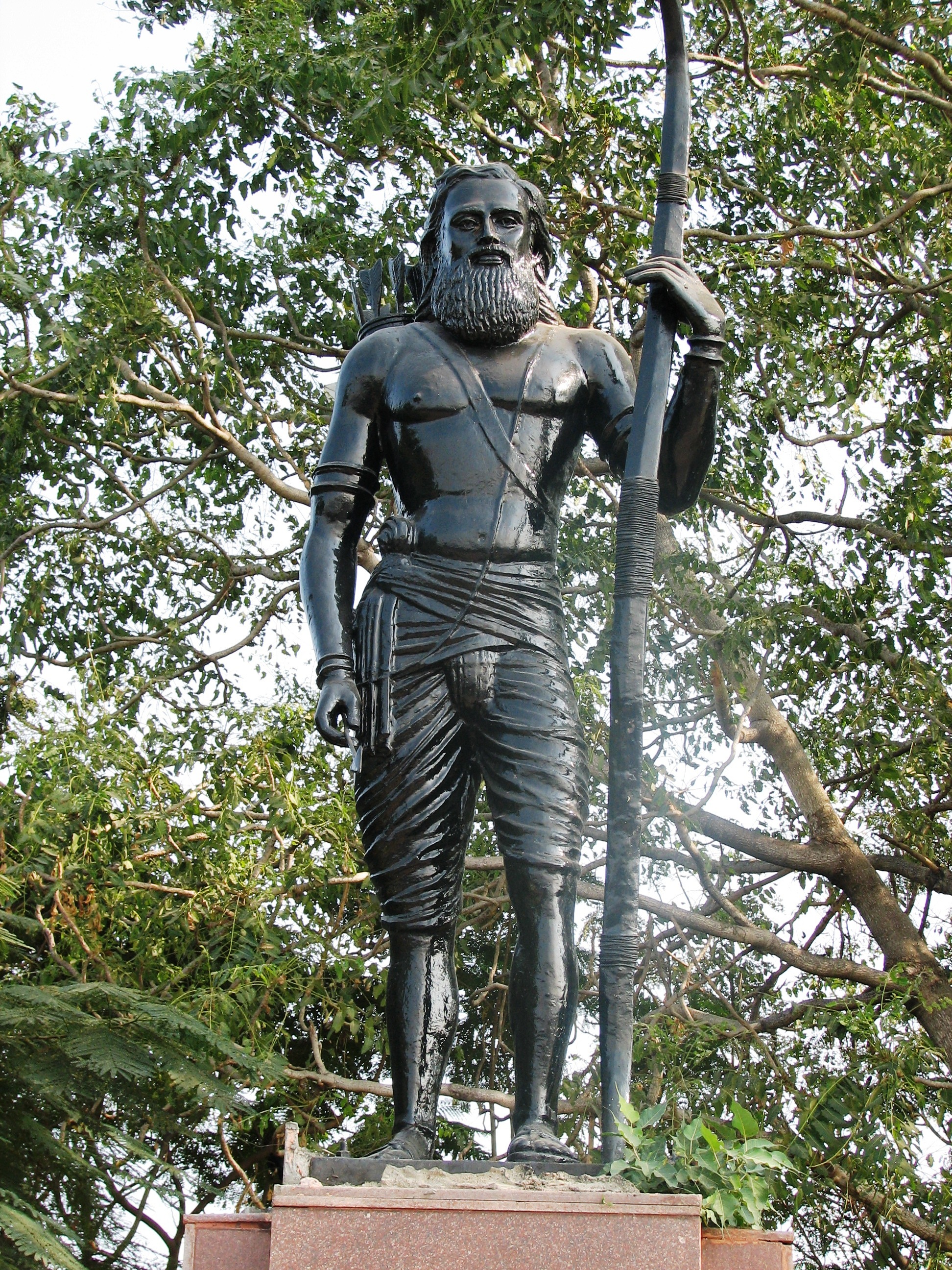
Alluri Sitarama Raju
Indian freedom fighter and revolutionary
Alluri Sitarama Raju was an Indian revolutionary who waged an armed rebellion against the British colonial rule in India. He engaged in guerilla campaigns against the British forces across the border regions of present-day Indian states of Andhra Pradesh and Odisha, and led the Rampa rebellion in 1922. He was known by the title "Manyam Veerudu" to the local people.
Amara Sullia Rebellion
Armed uprising against British Rule in British India
The Amara Sullia Rebellion was an armed uprising against the British government organized by the people of Arebhashe, Kodava people, and Tulunadu that took place in 1837, twenty years before the Sepoy Mutiny of 1857.
Amko Simko Massacre
Massacre in Odisha, India
The Amko Simko massacre or Amco Simco firing took place on 25 April 1939, when Lt. E. W. Marger ordered troops of the British Indian Army to open fire on a crowd of tribal peasants resisting the arrest of their leader Nirmal Munda in Simko village, Gangpur estate.
Ammembala Balappa
Ammembala Balappa was an Indian freedom fighter and socialist leader who is known for participating in the Quit India Movement in 1942. He played an important role in drafting the Declaration of land policy by the D. Devaraj Urs government during prime minister Indira Gandhi's tenure. He is also credited for founding the first Tulu language newspaper Tulu Siri in 1970.
A. M. Nair
Indian independence movement activist
Aiyappan Pillai Madhavan Nair (1905–1990), also known as Nair-san, was closely involved with the Indian independence movement in Japan during the 1920s through the 1940s.
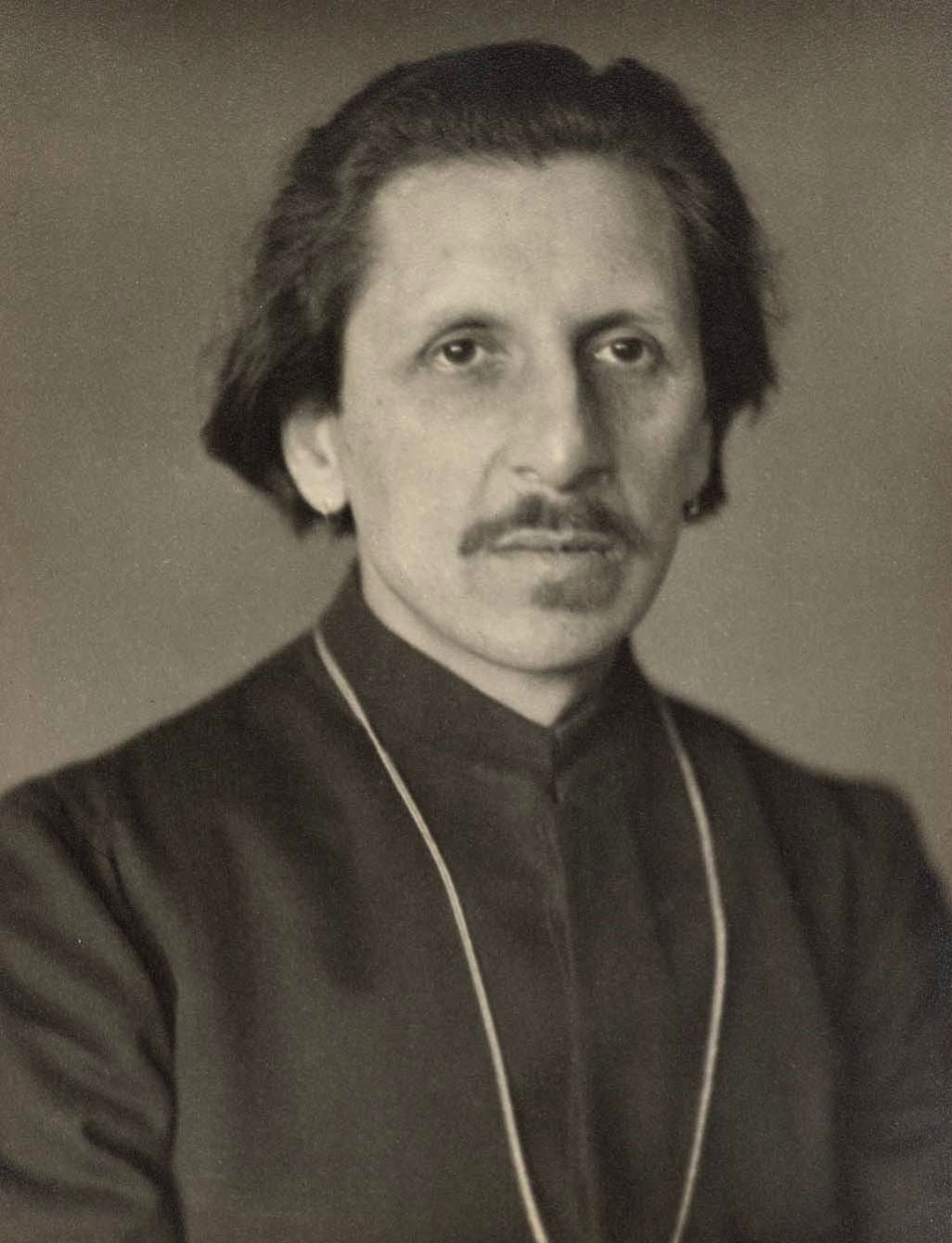
Ananda Coomaraswamy
Sri Lankan Tamil metaphysician (1877–1947)
Ananda Kentish Muthu Coomaraswamy was a Ceylonese metaphysician, historian and a philosopher of Indian art who was an early interpreter of Indian culture to the West. He has been described as "the groundbreaking theorist who was largely responsible for introducing ancient Indian art to the West".
Anglo-Khasi War
The Anglo-Khasi War was part of the independence struggle between the Khasi people and the British Empire between the years 1829-1833. The war started with Tirot Sing's attack on a British garrison that disobeyed orders of this Khasi King to stop a road and sanatorium construction project through the Khasi Hills. The Khasis were defeated in this war and the British gained supremacy over these hills.

Anjalai Ammal
Indian freedom fighter, social worker, reformer and politician
Anjalai Ammal Murugappan padaiyatchi was an Indian freedom fighter, social worker, reformer and politician from Cuddalore, Tamil Nadu. She spent seven and a half years in prison for her participation in the independence movement. She was among the early women to be elected to the Tamil Nadu State legislature, serving as a Congress MLA following her election victories in 1937 and 1946.

Anna Hazare
Indian activist (born 1937)
Kisan Baburao "Anna" Hazare is an Indian social activist who has led movements to promote rural development, increase government transparency, and investigate and punish corruption in public life. He was awarded the Padma Bhushan—the third-highest civilian award—by the Government of India in 1992.

Annexation of Dadra and Nagar Haveli
Annexation by India
The Annexation of Dadra and Nagar Haveli was the process in which the territories of Dadra and Nagar Haveli passed from Portuguese rule to independent rule, with Indian allegiance, in 1954.

Anushilan Samiti
Fitness club and anti-British underground revolutionary organization
Anushilan Samiti was an Indian fitness club, which was actually used as an underground society for anti-British revolutionaries. In the first quarter of the 20th century it supported revolutionary violence as the means for ending British rule in India. The organisation arose from a conglomeration of local youth groups and gyms (akhara) in Bengal in 1902. It had two prominent, somewhat independent, arms in East and West Bengal, Dhaka Anushilan Samiti, and the Jugantar group.
Appannagouda Patil
Indian freedom fighter
Appannagouda Patil was a freedom fighter and prominent leader in the co-operative movement of Karnataka.
August Offer
1940 offer by the British government to India
The August Offer was an offer made by Viceroy Linlithgow in 1940 promising the expansion of the Viceroy's Executive Council to include more Indians, the establishment of an advisory war council, the giving of full weight to minority opinion, and the recognition of the Indians' right to frame their own constitution after the end of the war. In return, it was hoped that all parties and communities in India would co-operate in Britain's efforts during the Second World War. However, the proposal was rejected by the Indian National Congress.

A. Vaidyanatha Iyer
Indian activist
A. Vaidyanatha Iyer, also known as Madurai Vaidyanatha Iyer or Ayyar was an Indian activist, politician and freedom-fighter who spearheaded the temple entry movement in Madras Presidency in 1939.
A. V. Kuttimalu Amma
Indian activist (1905–1985)
A.V. Kuttimalu Amma or Anakkara Vadakkathu Kuttimalu Amma (1905-1985) was a freedom fighter, social worker and politician in India. She was a prominent figure in Civil disobedience movement.
Azad Gomantak Dal
Indian armed revolutionary organization
The Azad Gomantak Dal was an armed revolutionary organization that sought to liberate Goa from Portuguese colonial rule. Unlike non-violent movements advocating for Goa’s independence, the AGD engaged in armed resistance, believing that force was necessary to overthrow Portuguese rule.

Azad Hind
Indian provisional government during World War II
The Provisional Government of Free India or, more simply, Azad Hind, was a short-lived Japanese-controlled provisional government in India. It was established in exile in Japanese-occupied Singapore during World War II in October 1943 and has been considered a puppet government of the Empire of Japan.

Azad Hind Bank
Myanmar bank
Azad Hind Bank was established on 5 April 1944, at Rangoon, the then headquarters of the Provisional Azad Hind Indian government supported by Imperial Japan.

Azimullah Khan
Leader of the Indian Rebellion of 1857
Azimullah Khan Yusufzai also known as Dewan Azimullah Khan and Krantidoot, was the ideological leader of the Indian Rebellion of 1857. He was initially appointed Secretary, and later Prime Minister to Maratha Peshwa Nana Saheb II.