Freedom Fighters - K
Honoring the brave souls who dedicated their lives to the independence and integrity of our motherland.
Kabiranjan Saikia
Indian poet
Swadhinata Phukan was an Indian poet, social activist, and participant in the Freedom Movement for Assam. He was recognized for his literary contributions and his involvement in social and political activism.

Kallara-Pangode Struggle
The Kallara-Pangode Struggle is one of the 39 agitations declared by the Government of India as the movements that led to the country gaining independence from the British rule. It is listed alongside some of the most important movements of Indian independence such as Quit India Movement, Khilafat Movement, Malabar Rebellion, the Ghadar Party Movement and Hollwell Revolt Movement by Netaji Subhash Chandra Bose. It is ranked among the 39 most revered movements that were part of Indian Independence Movement and culminated in the British rule ending over Indian territories in 1947.
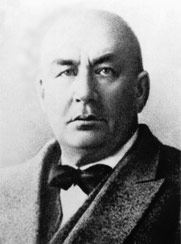
Kalmyk Project
Soviet plan to attack British India (1919–1920)
The Kalmyk Project was the name given to Soviet plans to launch a surprise attack on the North-West Frontier Province of British India via Tibet and other Himalayan buffer states in 1919–1920. It was a part of Soviet plans to destabilise the British Empire and other Western European imperial powers by unrest in South Asia. British Indian intelligence sent agents, such as F. M. Bailey, to Central Asia to trace the early Bolshevik designs on India.
Kamada Kinkar Mukherjee
Indian independence activist
Kamada Kinkar Mukherjee was an Indian independence activist and a member of the West Bengal Legislative Council from 1952 to 1964. He was married to Rajlakshmi Mukherjee and had 2 sons, Pranab Mukherjee who later became the President of India and Piyush Mukherjee and 4 daughters, Annapurna Banarjee, Swagata Das Mukherjee, Jharna and Krishna Mukherjee.

Kanneganti Hanumanthu
Indian freedom fighter (1870–1922)
Kanneganti Hanumanthu was an Indian freedom fighter and farmer leader who rebelled against British rule and spearheaded the Palnadu Rebellion.
Kanpur Bolshevik Conspiracy case
1924 court case in British India
The Kanpur Bolshevik Conspiracy Case was a controversial court case initiated in British India in 1924.
Karamat Ali Jaunpuri
Indian Islamic scholar
Karāmat ʿAlī Jaunpūrī, born as Muḥammad ʿAlī Jaunpūrī, was a nineteenth-century Indian Muslim social reformer and founder of the Taiyuni movement. He played a major role in propagating to the masses of Bengal and Assam via public sermons, and wrote over forty books. Syed Ameer Ali is one of his notable students.

K. C. Das
Indian entrepreneur
Khagendra Chandra Das was an Indian entrepreneur and proprietor of the Calcutta Chemical Company. Under his leadership, the company became one of the most well-known businesses of the Swadeshi movement, and was well-known for Margo (soap) and a number of other products.
K. C. S. Mani
Indian revolutionary
Konattu Madam Chidambara Iyer Subrahmania Iyer, known better as K. C. S. Mani, was an Indian socialist activist of Kerala who is known for his attempt of assassination on C. P. Ramaswamy Iyer, the then Diwan of Travancore, a princely state in India. This incident was a turning point in the history of Kerala, forcing the Diwan to leave Travancore and flee to Madras after assenting to merge Travancore with the Union of India.
Kedambadi Ramaiah Gowda
Indian freedom fighter
Kedambadi Ramaiah Gowda was an Indian freedom fighter and revolutionary who united the farmers from Sullia and led the Amara Sullia Rebellion in 1837. Ramaiah hoisted the native flag after lowering the Union Jack, which is known to be the first-ever freedom movement against the East India Company. He was banished by the British Raj in the aftermath of the rebellion.
Keshavrao Jedhe
Freedom Fighter and Socialist Leader (1896–1959)
Keshavrao Marutirao Jedhe was an Indian independence activist and politician from Pune. He served as a leading figure in the Indian National Congress, and in the Samyukta Maharashtra movement during the independence. The famous Swargate chowk in Pune is named after him.
Khuangchera
Mizo Warrior and Resistance figure (c. 1850-1890)
Pasalṭha Khuangchera was a distinguished Mizo warrior renowned for his valor and leadership during the late 19th century. He is celebrated for his resistance against British colonial forces in the Lushai Hills, present-day Mizoram, India.
Khubchand Baghel
Indian freedom fighter and politician
Khubchand Baghel was an Indian freedom fighter and politician from the present-day state of Chhattisgarh. He is considered one of the early proponents of a separate Chhattisgarh state. He represented the Dharsiwa Assembly constituency in the Madhya Pradesh Legislative Assembly during the 1950s. He also contributed to rural education and social reform. He served as a Member of Parliament in the Rajya Sabha, the upper house of the Indian Parliament, from 1965 to 1968.
Khwaja Usman
Afghan chieftain in Bengal (died 1612)
Khawāja Uthmān Khān Lōhānī, popularly known as Khwaja Usman, was a Pashtun chieftain and warrior based in northeastern Bengal. As one of the Baro-Bhuyans, he was a zamindar ruling over the northern parts of Bengal, including Greater Mymensingh and later in South Sylhet. He was a formidable opponent to Man Singh I and the Mughal Empire, and was the last of the Afghan chieftains and rulers in Bengal. His defeat led to the surrender of all the remaining Pashtuns as well as the incorporation of the Sylhet region into the Bengal Subah. He is described as the most romantic figure in the history of Bengal. His biography can be found in the Baharistan-i-Ghaibi, Tuzk-e-Jahangiri as well as the Akbarnama.

K. Kamaraj
Indian politician (1903–1975)
Kumaraswami Kamaraj, popularly known as Kamarajar was an Indian independence activist, politician, social reformer and statesman who served as the Chief Minister of Madras from 13 April 1954 to 2 October 1963. He also served as the president of the Indian National Congress between 1964–1967 and was responsible for the elevation of Lal Bahadur Shastri and later Indira Gandhi to the position of Prime Minister of India, because of which he was widely acknowledged as the "Kingmaker" in Indian politics during the 1960s. Later, he was the founder and president of the Indian National Congress (O).

K. Kumar
Indian orator and reformer
K. Kumar (1894–1973) was an Indian orator, reformer and writer of the Indian pre-independence era. He was one of the earliest socio-political leaders to have brought Mahatma Gandhi's message and the spirit of the national movement to the erstwhile Travancore State.
K. L. Nursey album
Rare collection of Indian independence struggle
The K. L. Nursey album, or the Collections of Photographs of Old Congress Party: KL Nursey, is a compilation of documentary photographs captured by an anonymous person. It contains 245 black-and-white photographs that cover the Civil Disobedience Movement of India. The album offers evidence that the movement involved counts of ordinary citizens, mostly women, of the then Bombay, who acted out of their own accord through an organization called Desh Sevika Sangh and not entirely through Mahatma Gandhi's prod. The album is currently with the Alkazi Foundation for the Arts (AFA).
Kotagiri Venkata Krishna Rao
Zamindar, freedom fighter and poet from Gampalagudem, India
Kotagiri Venkata Krishna Rao, also known as Gampalagudem Raja, was a prominent Zamindar of Gampalagudem estate in the Krishna district of Andhra region. He actively participated in the Indian independence movement during the 1920s, engaging in activities such as salt satyagraha and non-cooperation movements. Due to his involvement in these movements, he was frequently arrested and jailed.

Kovai Subri
Indian revolutionary
Kovai Subri was a Tamil revolutionary and freedom fighter during the Indian Independence Movement.

Krishnadevaraya
Emperor of Vijayanagara from 1509 to 1529
Krishnadevaraya was emperor of the Vijayanagara Empire from 1509 to 1529 and the third ruler of the Tuluva dynasty. Widely regarded as one of the greatest rulers in Indian history, he presided over the empire at its political and cultural zenith and is remembered as an iconic figure by many Indians. Following the decline of the Delhi Sultanate, he ruled the largest and most powerful empire in India during his time.

Kunjali Marakkar IV
Fleet admiral of the Samoothiri
Kunjali Marakkar was the title inherited by the Admiral of the fleet of the King Samoothiri / Zamorin, the King of Calicut, in present-day Kerala, India. There were four Marakkars whose war tactics defended against the Portuguese invasion from 1520 to 1600. The Kunjali Marakkars are credited with organizing the first naval defense of the Indian coast. Indian Navy commissioned INS Kunjali in their memory on 11 July 1954, with Captain Michael Benjamin Samuel, VSM, as the first Commanding Officer.
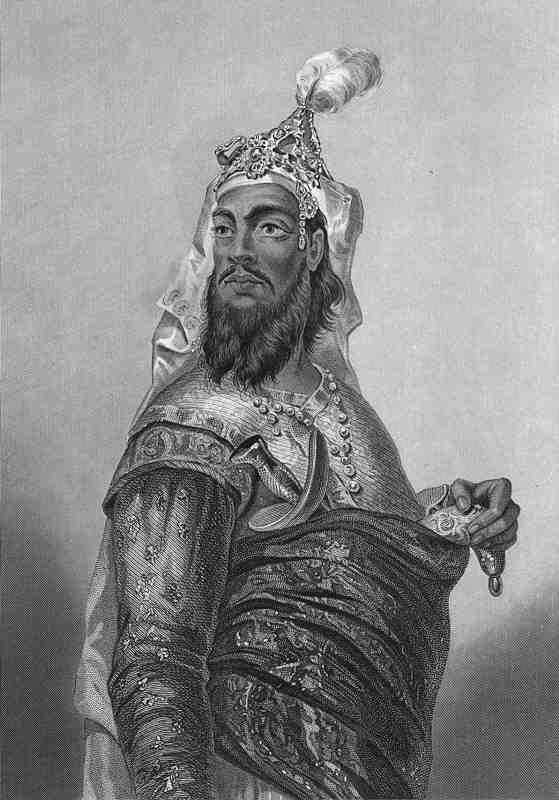
Kunwar Singh
Leader of the Indian rebellion of 1857
Veer Kunwar Singh, also known as Babu Kunwar Singh was a chief organiser of the Indian Rebellion of 1857 from the Bhojpur region of Bihar. He was originally the ruler of Jagdishpur estate. He led a selected band of armed soldiers against the troops under the command of the British East India Company.
Kuyili
Woman Commando of Velu Nachiyar
Veeramangai Kuyili was an army commander of queen Velu Nachiyar who participated in campaigns against the East India Company in the 18th century. She is considered the first suicide bomber and "first woman martyr" in Indian history.