Freedom Fighters - M
Honoring the brave souls who dedicated their lives to the independence and integrity of our motherland.

Madan Mohan Malaviya
Indian independence activist, scholar, educator, politician (1861–1946)
Madan Mohan Malaviya was an Indian scholar, educational reformer, and activist notable for his role in the Indian independence movement. He was president of the Indian National Congress four times and the founder of Akhil Bharat Hindu Mahasabha. He was addressed as Pandit, a title of respect. Malaviya is known as the founder of one of the most prestigious universities of India named Banaras Hindu University.
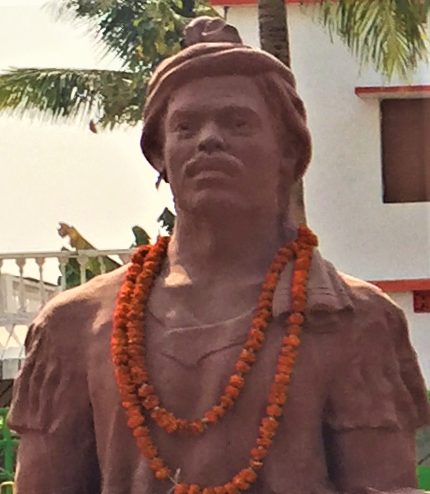
Madhab Chandra Routray
19th c. Indian revolutionary
'Samanta' Madhab Chandra Routray was the dalabehera, or the Paika unit commander of Tapanga, in the modern-day Khordha district of Odisha. He led a revolt against British East India Company forces in 1827. With the support of the local community, the warriors under his command withstood the British attack on Tapanga for seven days. He was eventually forced to surrender due to dwindling support, lack of resources, and a lieutenant passing information to the British. However, Routray was later released as the British recognized his stature within the community and the risk of a mass uprising if he were harmed. He earned himself the title of 'Samanta' or 'The commander of Ten Thousand Paikas', which was also given to his forefathers for their military services to the Gajapati king of Khordha.

Madho Singh (Ghess)
Indian rebel
Madhab Singh Bariha or Madho Singh was the Binjhal Zamindar (landlord) of Ghess locality of Bargarh district in Odisha and was a close associate of Veer Surendra Sai in the Sambalpur uprising against the British East India Company. He was hanged to death at the age of 72 on 31 December 1858 at Jail Chowk of Sambalpur, after being caught in the same year for his ferocious and heroic resistance to the British takeover of the region with their appalling policies. Three out of his four valiant sons were martyred while the eldest was sentenced to life imprisonment. His granddaughter Purnima committed suicide after the British hanged her rebellious husband from the Sonakhan Zamindari at Raipur.
Maganlal Goyal
Indian Independence activist and politician (1927–2012)
Maganlal Goel was an Indian independence activist and politician from Madhya Pradesh. He served as an MLA from Tikamgarh three times and held various positions in the Tikamgarh municipal council for 16 years.
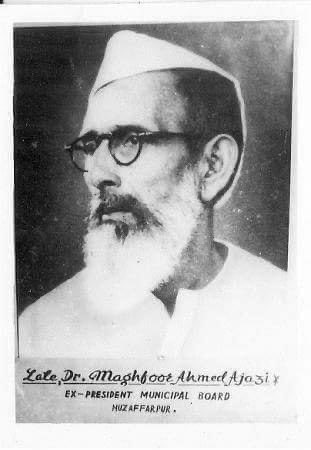
Maghfoor Ahmad Ajazi
Indian freedom fighter (1900–1966)
Maghfoor Ahmad Ajazi was an Indian political activist and statesman, and prominent figure in the Indian independence movement.
Mahadev Govind Ranade
Indian scholar, social reformer, judge and author
Rao Bahadur Mahadev Govind Ranade, popularly referred to as Nyayamurti Ranade, was an Indian scholar, social reformer, judge and author. He was one of the founding members of the Indian National Congress party and held several designations such as Member of the Bombay Legislative Council and Member of the Finance Committee at the Centre. He was also a judge of the Bombay High Court.

Maharana Pratap
Maharana of Mewar from 1572 to 1597
Pratap Singh I, popularly known as Maharana Pratap, was king of the Kingdom of Mewar, in north-western India in the present-day state of Rajasthan, from 1572 until his death in 1597. He is notable for leading the Rajput resistance against the expansionist policy of the Mughal Emperor Akbar including the battle of Haldighati.
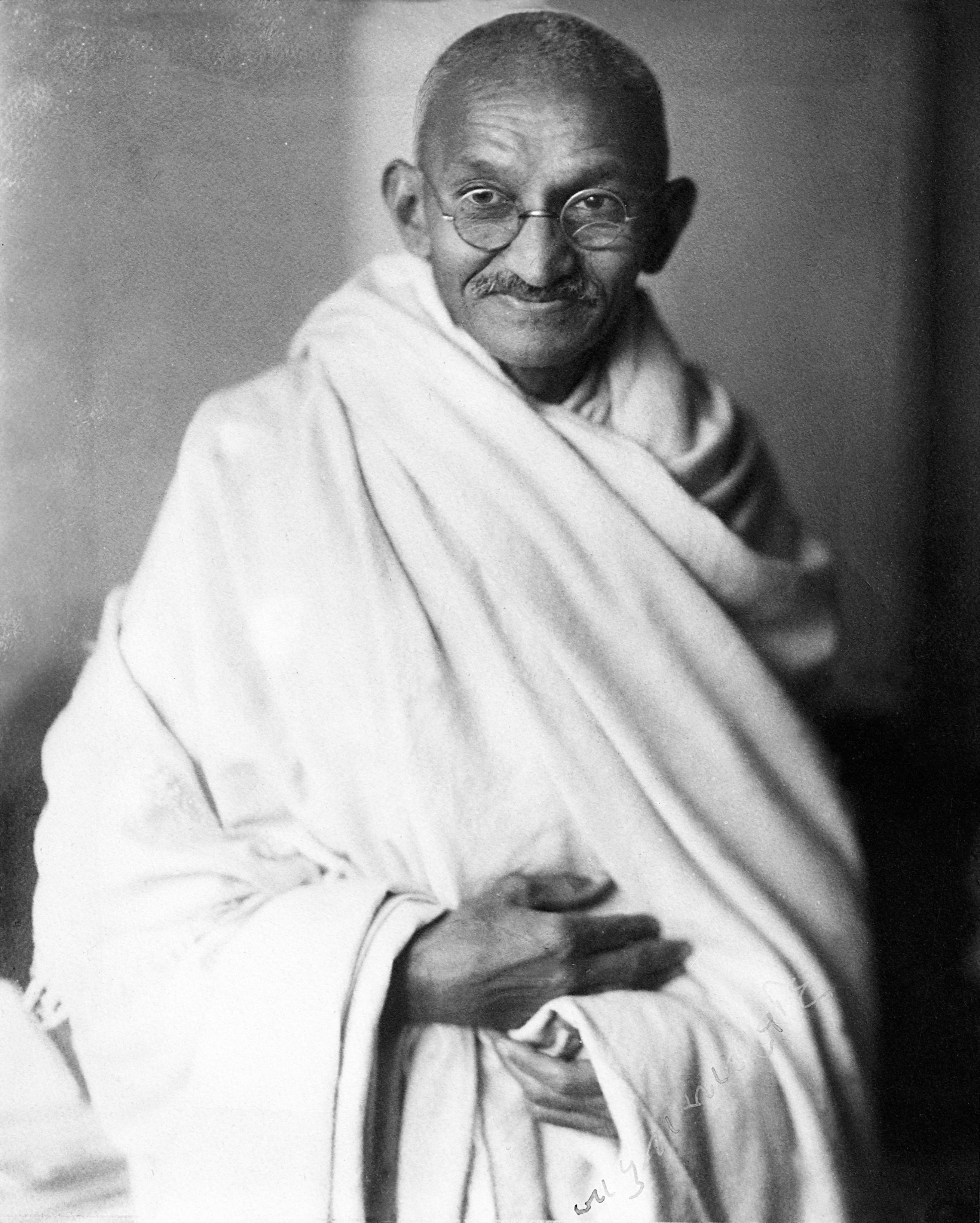
Mahatma Gandhi
Indian independence activist (1869–1948)
Mohandas Karamchand Gandhi was an Indian lawyer, anti-colonial nationalist, and political thinker who employed nonviolent resistance to lead the successful campaign for India's independence from British rule. He inspired movements for civil rights and freedom across the world. The honorific Mahātmā, first applied to him in South Africa in 1914, is used worldwide.
Mahboob Ali Baig Sahib Bahadur
Mahboob Ali Baig Sahib Bahadur, also known as Mahboob Ali Baig, was an indian politician. He was the member of Constituent Assembly of India from Madras since 14 July 1947 to 24 January 1950. He played a key role in making Muslim personal law Act 1937.
Mahila Rashtriya Sangha
Defunct Political organisation
The Mahila Rashtriya Sangha was the first organisation established in India with the aim of engaging women in political activism. It was formed in Bengal Presidency, British India, in 1928 by Latika Ghosh and Prabhavati Bose upon the instigation of Netaji Subhas Chandra Bose, a prominent Indian nationalist leader. Believing that improvement of the status of women and achievement of self-governance for India were inseparable aims, the MRS was an empowerment institution body that placed much emphasis on education as a means to achieve its goal.

Mahmud Hasan Deobandi
Indian Muslim scholar and activist (1851–1920)
Mahmud Hasan Deobandi was an Indian Muslim scholar and an activist of the Indian Independence Movement, who co-founded the Jamia Millia Islamia University and launched the Silk Letter Movement for the freedom of India. He was the first student to study at the Darul Uloom Deoband seminary. His teachers included Mahtab Ali Deobandi, Muhammad Qasim Nanawtawi and Mahmud Deobandi, and he was authorized in Sufism by Imdadullah Muhajir Makki and Rashid Ahmad Gangohi.

Mai Bhago
Sikh warrior woman (1670–1720)
Mai Bhago also known as Mata Bhag Kaur, was a Sikh woman who led Sikh soldiers against the Mughals in 1705. She was an exceptionally skilled warrior on the battlefield and is revered as a warrior saint in Sikhism. She was known for rallying the 40 Sikhs who abandoned Guru Gobind Singh at the siege of Anandpur Sahib and bringing them back to fight.
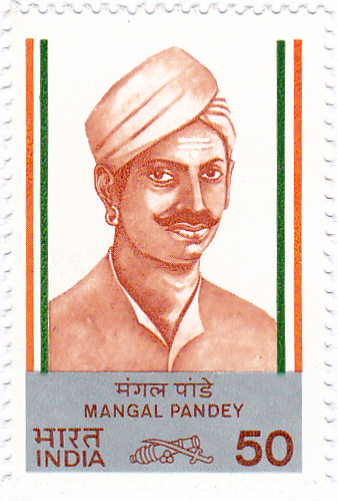
Mangal Pandey
Indian soldier and freedom fighter (1827–1857)
Mangal Pandey was an Indian soldier who played a key role in the events that led to the Indian Rebellion of 1857, which resulted in the dissolution of the East India Company and the beginning of the British Raj through the Government of India Act 1858. He was a sepoy in the 34th Regiment of the Bengal Native Infantry. In 1984, the Republic of India issued a postage stamp in his memory. His life and actions have also been portrayed in several Indian cinematic productions.

Manindra Nath Nayak
Manindra Nath Nayak was a Bengali revolutionary and Indian independence activist.
Margaret Pavamani
Margaret Pavamani (1897–1985) was a freedom fighter, social worker in Kerala, India. She was a prominent figure in Civil disobedience movement. She was the wife of Benjamin Pavamani, a prominent lawyer and freedom fighter who was an advocate in Calicut. Margaret born in Pappiniseri on 1897.

Marthanda Varma
Maharaja of Travancore from 1729 to 1758
Anizham Thirunal Marthanda Varma was the founding monarch of the southern Indian Kingdom of Travancore from 1729 until his death in 1758. He was succeeded by Rama Varma (1758–98).

Mata Ganga
Wife of the fifth Sikh guru
Mata Ganga was the wife of the fifth Sikh guru, Guru Arjan. She is one of the four consorts bestowed with the title of Guru-Mahal.

Mata Sulakhni
Wife of Guru Nanak (1473–1545)
Sulakhni (1473–1545), also known as Choni and often referred as Mata Sulakhni, was the wife of Guru Nanak, the founder of Sikhism.

Mata Tripta
Mother of Guru Nanak (1446–1522)
Mata Tripta was the mother of Guru Nanak, the founder of Sikhism.

Mathanda Appachu
Native military leader in a South Asian battle
Mathanda Appachu was an Indian warrior and freedom fighter. He was an officer in Chikka Vira Rajendra's army. He was from Bollumad village in Beppunad in Kodagu. He was also known as Madanta Appachu. He defeated the British in battle in 1834.
Maurice Frydman
Indian activist (1901–1976)
Maurice Frydman, aka Swami Bharatananda, was an engineer and humanitarian who spent the later part of his life in India. He lived at the ashram of Mahatma Gandhi and took an active part in India's fight for independence—notably in helping to draft a new constitution for the State of Aundh that became the Aundh Experiment. He was a Polish Jew who subsequently converted to Hinduism.
Mazhar Nanautawi
Indian Muslim scholar
Muḥammad Mazhar Nanautawi (1821–1885) was an Indian Muslim scholar and a freedom struggle activist who played a crucial role in the development Mazahir Uloom. He participated in the Battle of Shamli.
M. C. Davar
M. C. Davar was a freedom fighter and associate of Jawaharlal Nehru who is remembered for his opposition to the partition of India, his work among the refugees from Pakistan and his championing the idea of a confederation of India and Pakistan.
Meghar Singh Sakarwar
Indian Independence Activist
Meghar Singh Sakarwar or Meghar Singh was a zamindar from Gahmar village in Ghazipur district of present day Uttar Pradesh, India. He participated in the rebellion of 1857 against East India Company supporting the rebel soldiers under Babu Amar Singh.
Member for India
The Honourable Member for India was an informal title popularly applied to a Member of Parliament (MP) in the British House of Commons who were known for taking a particular personal interest in social or political conditions in British India or for personal sympathy towards the Indian independence movement. The historian Nicholas Owen describes it as a "tradition" for those who "wished to take the moral lead in demolishing or transforming empire".
M. Farooqui
Indian politician (1920–1997)
Muqimuddin Farooqui was an Indian politician. He was a key leader of the students movement during the Indian independence struggle. As a leader of the Communist Party of India he headed the Delhi unit of the party 1944-1971, and from 1971 onwards he was a national-level leader of the party.

Mirabehn
English activist of the Indian independence movement (1892–1982)
Madeleine Slade, also known as Mirabehn or Meera Behn, was a British supporter of the Indian Independence Movement who in the 1920s left her home in England to live and work with Mahatma Gandhi. She devoted her life to human development and the advancement of Gandhi's principles.

Mir Habib
Warlord under Nawab of Bengal and Maratha Empire
Mir Habib Isfahani was a warlord who used to be in the employment of the Mughal Subedars (officers) of Bengal, but after being discontent with promotions, went on to aid the Maratha invaders of Bengal and aided in the various Maratha campaigns carried out in Bengal, Bihar, Orissa and adjoining places.

Mir Sher Muhammad Talpur
3rd Mir of Mirpur Khas
Mir Sher Muhammad Talpur was the last Mir of Mirpur Khas who belonged to the Manikani house of the Talpur dynasty. The son of Mir Ali Murad Talpur, the founder of Mirpur Khas, he ascended the throne in 1829 and held onto it until he was defeated in the Battle of Hyderabad in 1843.

Mohammad Abdullah (India)
Indian freedom fighter
Mohammad Abdullah, also called Abdulla or Abdullah, was an Indian freedom fighter, who is known for killing John Paxton Norman, Chief Justice in the High Court at Fort William in Bengal, in British India.

Mohammed Abdur Rahiman
Indian politician
Mohammed Abdur Rahiman Sahib was an Indian freedom fighter from Kerala. He was a member of the Madras Legislative Assembly. As president of Kerala Pradesh Congress Committee(Malabar) in 1939 he played a key role in setting up the Indian National Congress in Kerala.

Mohan Singh (military officer)
Indian military officer and politician
Mohan Singh Ghuman was an Indian military officer and politician. He was a British Indian Army officer, and later member of the Indian Independence Movement, best known for founding and leading the Indian National Army in South East Asia during World War II. Following Indian independence, Mohan Singh later served in public life as a Member of Parliament in the Rajya Sabha of the Indian Parliament.
Mohini Devi
Mohini Devi was a prominent figure in the Indian independence movement in the Indian subcontinent, known as an ardent nationalist and revolutionary. Her family was closely associated with the progressive education and cultural movements of present-day Bangladesh. Mohini Devi worked actively in support of the Indian independence movement and made significant contributions to women’s education, emancipation, and social reform.
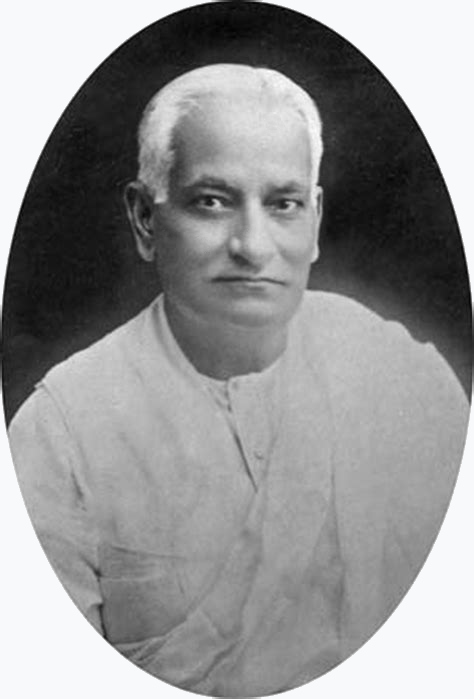
Motilal Nehru
Indian lawyer and politician (1861–1931)
Motilal Nehru was an Indian lawyer, activist, and politician affiliated with the Indian National Congress. He served as the Congress President twice, from 1919 to 1920 and from 1928 to 1929. He was a patriarch of the Nehru-Gandhi family and the father of Jawaharlal Nehru, India's first Prime Minister.
Motilal Verma
Indian politician
Motilal Verma (1906–1993) was an Indian political activist who participated in the Indian independence movement.

Moulvi Muhammad Baqir
Indian journalist and religious scholar
Moulvi Muhammad Baqir (1780–1857) was a scholar, Indian independence activist and journalist based in Delhi. He was the first journalist to be executed following the Indian rebellion of 1857. He was arrested on 16 September 1857 and executed by gunshot two days later without trial. He was the founder and editor of Delhi Urdu Akhbar.

M. P. T. Acharya
Indian nationalist, communist and then anarchist (1887–1954)
Mandayam Parthasarathi Tirumal Acharya was an Indian nationalist, communist and then anarchist who was among the founding members of the Communist Party of India. Born to an Aiyangar brahmin family, Indian nationalism was part of his upbringing. Under threat of persecution, he left for Europe and became associated with London's India House and worked with V. D. Savarkar. He attempted to train as a revolutionary in the 1909 Second Melillan campaign and in Paris, where he became involved in the socialist movement. As a key functionary of the Berlin Committee in the World War I Hindu-German Conspiracy, Acharya attempted to rally German support for Indian revolutionaries. After the war, Acharya moved to the Soviet Union and helped found the Communist Party of India at Tashkent. Disappointed with the Communist International, he left for Europe, worked with the League against Imperialism, and developed anarcho-syndicalist views. After his ban was lifted in 1935, Acharya returned to India, where he worked as a journalist.

Mufti Abdul Razzaq
Indian Muslim scholar (1925–2021)
Mufti Abdul Razzaq was an Indian Muslim scholar, mufti and an activist of the Indian independence movement, who served as the ninth general secretary of the Jamiat Ulama-e-Hind. He was the vice-president of Jamiat Ulama-e-Hind's Arshad faction. He established the Madrasa Jamia Islamia Arabia in Bhopal.

Muhammad Munir Nanautavi
Indian Islamic scholar and freedom fighter (1831–1904)
Muhammad Munir Nanautavi (1831–1904) was an Indian Islamic scholar, administrator, and freedom fighter associated with the Deobandi movement. He was a disciple of prominent scholars such as Mamluk Ali Nanautavi, Sadruddin Khan Azurda Dehlawi, and Shah Abdul Ghani Dehlavi. He actively participated in the Indian Rebellion of 1857 and played a key role in the Battle of Shamli. Following the uprising, he devoted himself to education and became a teacher at Bareilly College. In 1894, he was appointed the fourth rector (muhtamim) of Darul Uloom Deoband, a position he held for a brief period before resigning in 1895. He was also known for his contributions to Islamic literature, particularly in Sufism and Hanafi jurisprudence.
Mukhtar Ahmed Ansari
Loading biography...
Mukundrao Pedgaonkar
Loading biography...
Murari Sharma
Murari Lal , also known as Murari Sharma was an Indian revolutionary who took part in the Kakori Conspiracy and absconded away. Police could not trace him out as Murari Sharma was his fake name.
Muzaffar Hasan
Indian politician
Muzaffar Hasan was an Indian nationalist leader from Uttar Pradesh, serving Indian National Congress or Congress Party organization at city level, alongside Pandit Jawaharlal Nehru, in Allahabad. As a party worker, he took part in protest rallies against British rule, facing police action with imprisonment in jail, many times, between 1920 and 1947. Muzaffar Hasan served as minister in Uttar Pradesh government of Congress party.
MV Rama Rao
Loading biography...

Mylapore clique
Influential faction in the Madras Presidency
The Mylapore clique was a small group of politically moderate and elite Brahmins, — many of whom were noted lawyers, administrators, academics or educators, and industrialists — in the Madras Presidency. The clique is considered to have "wielded almost exclusive influence and patronage in the service and government appointments", and "controlled the flow of resources out of the institutions of the capital", and "dominated the professional and political life of [the presidency]."