Freedom Fighters - C
Honoring the brave souls who dedicated their lives to the independence and integrity of our motherland.

C. Achutha Menon
Former chief minister of Kerala
Chelat Achutha Menon was an Indian politician and lawyer who served as the 4th Chief Minister of Kerala from November 1969 to August 1970 and again from October 1970 to 1977. He is viewed as one of the most influential Chief Ministers of Kerala.
Caroline Anthonypillai
Caroline Anthonypillai was the wife of S. C. C. Anthonypillai, a Sri Lankan union organizer and Indian politician. An activist in her own right, she was eulogized as a "leading light of the leftist movement".
Cellular Jail
Loading biography...
CGK Reddy
Indian activist, freedom fighter and politician (1921–1994)
Cattamanchi Gopala Krishnamoorthy Reddy, commonly referred to as CGK Reddy, was an Indian activist, freedom fighter and politician. He was the first general manager of the Deccan Herald, a business manager at The Hindu, editor of Prajavani, founder director of the Research Institute of Newspaper Development (RIND), in Taramani, Chennai and former president of The Indian Newspaper Society. During the Emergency, he collaborated closely with George Fernandes, notably as part of the Baroda dynamite case. He helped to found the People's Union for Civil Liberties, and served as President of the Karnataka chapter.
Chakhi Khuntia
Loading biography...
Chapekar brothers
Loading biography...
Charles Freer Andrews
Loading biography...
Chempakaraman Pillai
Loading biography...

Chicago Radio
Indian manufacturer of public address systems
Chicago Radio is an Indian manufacturer of public address systems, closely associated with the pro-independence Indian National Congress during the last decades of the British Raj. The company was established by Gianchand Chandumal Motwane in 1909 as the Eastern Electric & Trading Company. It changed its name to the Chicago Telephone Supply Company in 1919 when it moved from Sindh to Bombay. The company served as a distributor for an American company of the same name, but retained the branding when the American firm went out of business. Under Gianchand's son Nanik the company began a close association with the Congress, providing public address systems at numerous meetings and speeches. The company provided this support on a pro bono basis until the 1960s. It remains in business on a small scale, as Motwane Communication Systems Pvt. Ltd.
Chimaji Jadhav
Loading biography...
Chittagong armoury raid
Loading biography...

Choithram Gidwani
Dr. Choithram Gidwani was born at Hyderabad (Sind) on 25 December 1889 and received his entire education there. After passing the matriculation examination his spirit of service impelled him to accept a teacher's job at Bubak in Dadu District, but finding little scope for his activities there he chucked it up returning to Hyderabad, he joined the Medical School there, and after completing the course he entered Government service as a Medical Officer. Dr. Choithram came in contact with Mahatma Gandhi at the Congress Session held in Bombay in 1915. In the following year, he attended the Session at Lucknow as a delegate from Sind. He successfully organised 'hartal' at Hyderabad in March 1919 in protest against the Rowlatt Act. Dr. Choithram was sent to jail several times, first in 1922 when as editor of the "Hindu" his writings were regarded as seditious; then in 1930 when he broke the Salt Law at Karachi; again during the Civil Disobedience Movement of 1932 and also in 1933 for defying the Govt. orders not to leave Hyderabad; in 1940 for making a fiery speech at Lahore; and finally in 1942 for joining the Quit India Movement launched by Gandhiji. Whenever outside jail, besides attending to his political activities he did valuable humanitarian work such as running a charitable dispensary, supplying medicines to the poor and the needy free of charge, collecting donations for Pathshalas and Narishalas, organising relief work during floods and earthquakes as also during communal riots, and taking measures to prevent persecution of one community at the hands of the other. He died in the Northcote Nursing Home at Bombay on the night of 13 September 1957. Dr. Choithram was an embodiment of service and self-sacrifice. Way back in 1924 Gandhiji wrote about him in the Young India - "He has sacrificed everything and turned into a 'Faqir' all for the cause of his country."
Chowdary Satyanarayana
Loading biography...

Colvin R. de Silva
Sri Lankan politician
Colvin Reginald de Silva was a Sri Lankan Cabinet Minister of Plantation Industries and Constitutional Affairs, prominent member of parliament, Trotskyist leader and lawyer in Sri Lanka. He was one of the founders of the Lanka Sama Samaja Party, the first Marxist party in Sri Lanka.
Communal Award
1932 statement on minority electorates in British India
The Communal Award was created by British Prime Minister Ramsay MacDonald on 16 August 1932. Also known as the MacDonald Award, it was announced after the Round Table Conference (1930–1932) and extended the separate electorate to the Depressed Classes and other minorities. The separate electorate had been introduced by the Indian Councils Act 1909 for the Muslims and extended to the Sikhs, Indian Christians, Anglo-Indians and Europeans by the Government of India Act 1919.
Communist involvement in the Indian independence movement
Loading biography...

Congress Radio
1942 underground radio station in India
Congress Radio, also known as Azad Radio, was an underground radio station that operated for about three months during the Quit India Movement of 1942, a movement launched by Mahatma Gandhi against the British Raj for independence of India. Congress Radio was the broadcasting mouthpiece of the Indian National Congress and functioned from different locations in Bombay, present-day Mumbai, and briefly from Nashik. It was organized by Usha Mehta (1920–2000), then a 22-year student activist, with the help of amateur radio operators. Others who were involved included Vithalbhai Jhaveri, Vitthaldas Khakar, Chandrakant Jhaveri, and Babubhai Thakkar. The broadcasting equipment was supplied by Nanik Motwane of Chicago Radio, Bombay. Prominent leaders of the Indian independence movement like Ram Manohar Lohia, Achyutrao Patwardhan, and Purushottam Trikamdas were also associated with Congress Radio.
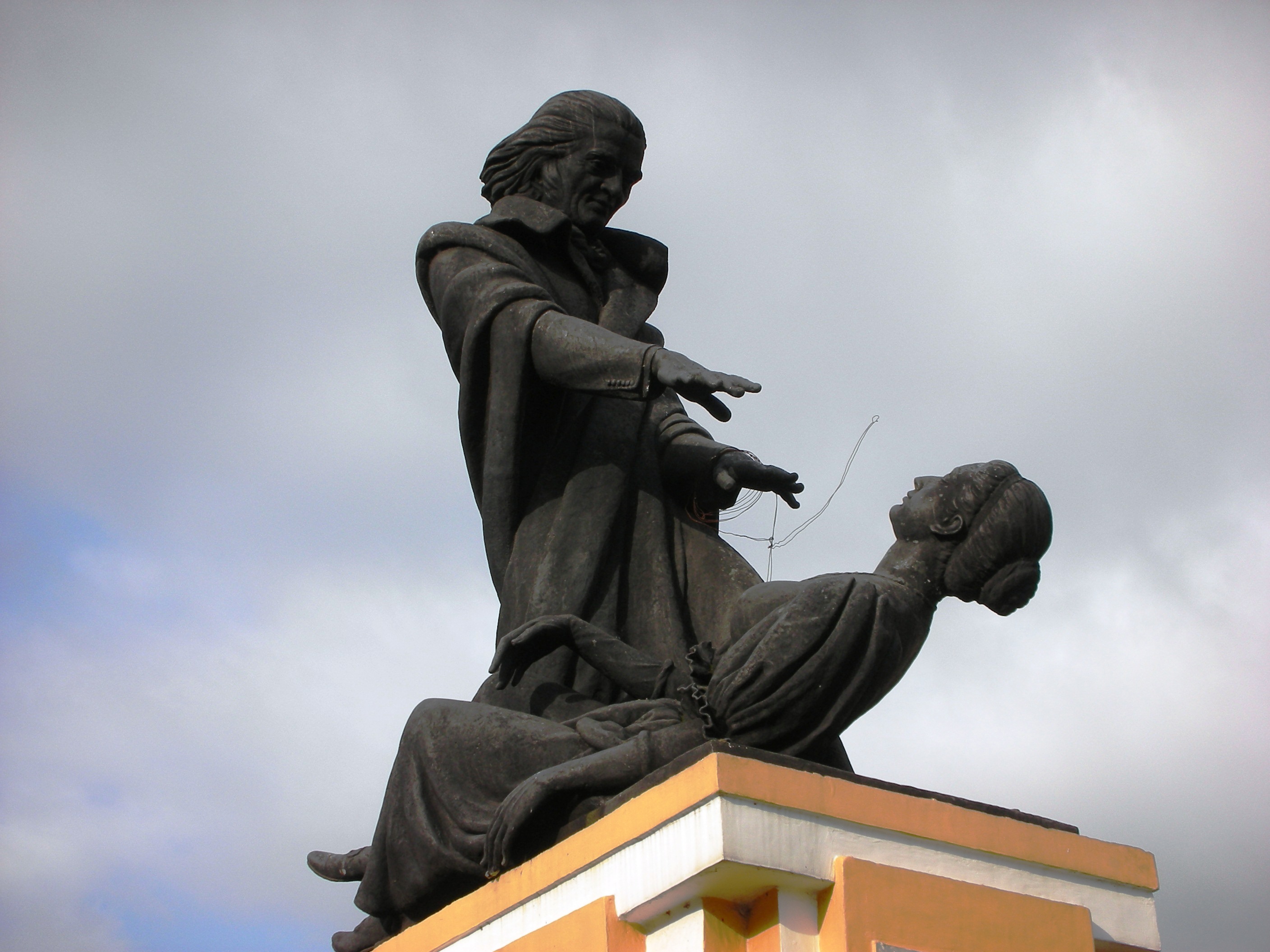
Conspiracy of the Pintos
1787 rebellion against Portuguese rule in Goa
Conspiracy of the Pintos, also known as the Pinto Revolt or the Pinto Conspiracy, and in Portuguese as Conjuração dos Pintos, was a rebellion against the Portuguese rule in Portuguese Goa in 1787. The leaders of the plot were three prominent priests from the village of Candolim in the concelho of Bardes, Goa. The highest-ranked leaders belonged to the Pinto clan of Candolim, hence the name of the rebellion. The Pintos were a Goan noble family and later vassals of Peshwa Baji Rao II in the Maratha Confederacy. They were one of the wealthiest and noblest families in Goa during the 18th century.
Coolie-Begar movement
Movement
The Coolie-Begar or Coolie- Utar movement was a non-violent movement by the general public of Kumaun in the Bageshwar town of United Provinces in 1921. This movement was led by Hargovind Pant and Badri Datt Pandey, who were awarded the titles of 'Jannayak' and 'Kumaon Kesari' respectively after the success of this movement. The aim of this movement was to put pressure on the British to end the practice of Coolie-Begar. Mahatma Gandhi, while praising the movement, named it 'Bloodless Revolution'.
Cripps Mission
Loading biography...