Resistance to Mughal Imperial Rule
1526–1857
The era of Maharana Pratap, Chatrapati Shivaji, and the Sikh Gurus.
Historical Timeline
7th Century - 1947
Heroes of this Period (35)

Akbar
Mughal emperor from 1556 to 1605
Akbar, also known as Akbar the Great, was the third Mughal emperor, who reigned from 1556 to 1605. Akbar succeeded his father, Humayun, under a regent, Bairam Khan, who helped the young emperor expand and consolidate Mughal domains in the Indian subcontinent. He is generally considered one of the greatest emperors in Indian history and led a successful campaign to unify the various kingdoms of Hindūstān or India proper.

Ali Adil Shah II
Sultan of Bijapur from 1656 to 1672
Ali Adil Shah II was the 8th Sultan of Bijapur. He succeeded to the throne of Bijapur through the efforts of the Prime Minister Khan Muhammad and the Queen, Badi Sahiba, sister of Qutb Shah of Golkonda on the death of Mohammed Adil Shah of Bijapur on 4 November 1656.

Baba Buddha
Important figure in Sikhism
Baba Buddha was a prime figure in early Sikhism.

Baba Gurbaksh Singh
Sikh warrior (1688–1764)
Baba Gurbaksh Singh was a Sikh warrior from the 18th century who served under the Shaheedan Misl of the Sikh confederacy. Gurbaksh Singh along with 29 other Sikh warriors led a last stand against the Afghan and Baloch forces on 1 December 1764, at Amritsar. It was in this skirmish that Baba Gurbaksh Singh along with 29 other Sikhs were killed. He is remembered by Sikhs as one of their notable martyrs of the 18th century.
Babu Himmat Sah
Ruler of Kohra
Babu Himmat Sah was the founder and the first ruler of the Kohra (estate) in the Awadh region of northern India. He belonged to the Bandhalgoti clan of Rajputs and was the younger son of Raja Bikram Sah, the then ruler of Amethi.
Baburi Andijani
Secret lover of Moghul Emperor Babur katua
Baburi Andijani or Andizani was a lover of Zahiruddin Muhammad Babur; Emperor Babur first saw him at the camp market in Uzbekistan, in 1499, and was deeply infatuated. No more is known about Baburi. Although Baburi is rarely mentioned in other historical texts, the emperor mentions his beloved, Baburi many times in his autobiography "Babarnama" and expresses his love towards Baburi writing several couplets about him.
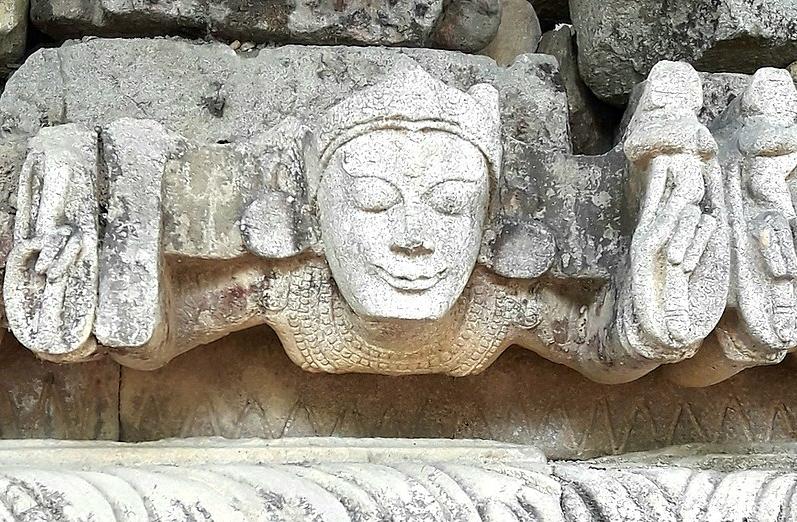
Balinarayan
King of the Darrang Kingdom from 1616 to 1638
Balinarayan alias Dharmanarayan or Baldeo of Mughals was the son of Koch King Raghudev and younger brother of King Parikshit who was established as the first king of Darrang Desa as a tributary by Ahom king Pratap Singha. He was the chief conductor of the operations conducted against the Mughals during their occupation of Kamrupa which was annexed to the Mughal domain after the defeat of the Koch Hajo kingdom.

Bhai Bala
Companion of Nanak (1466–1544)
Bhai Bala is believed by some to have been a companion of Guru Nanak. Born in Talwandi into a Sandhu Jat family, Bala is also said to have been a close associate of Bhai Mardana.
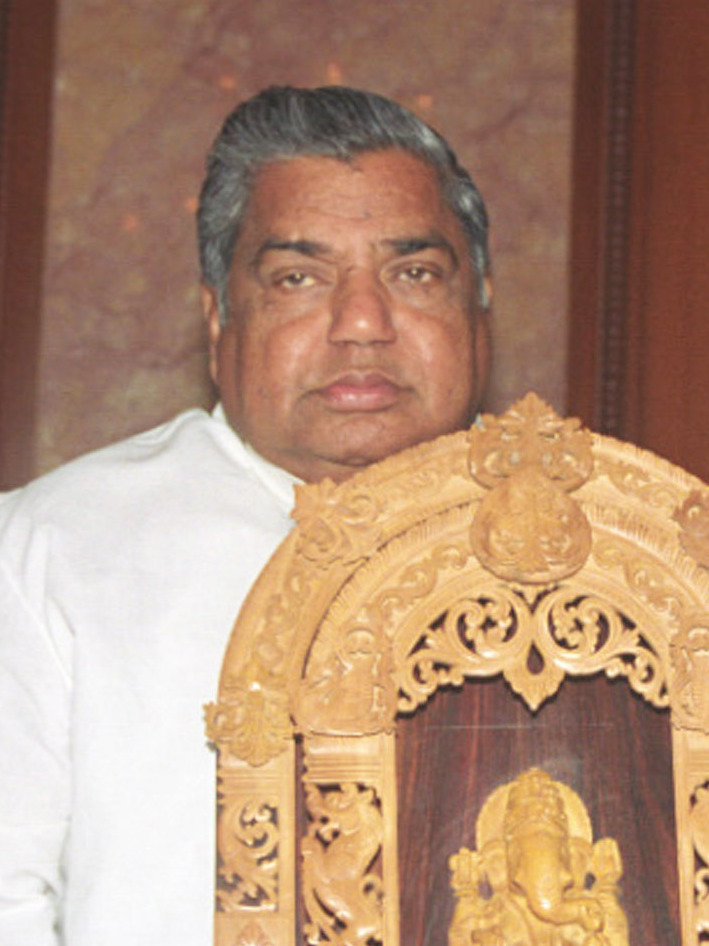
Dharam Singh
17th Chief Minister of Karnataka
Dharam Narayan Singh was an Indian politician who served as the 11th Chief Minister of Karnataka from 28 May 2004 to 28 January 2006 and Member of the Lok Sabha from Bidar Lok Sabha constituency, in 15th Lok Sabha from 2009 to 2014.
Dhari Hambir Malla Dev
Raja of Mallabhum from 1620 to 1626
Dhari Hambir Malla Dev, also known as Dhari Hambeera was the fiftieth king of the Mallabhum. He ruled from 1620 to 1626 CE.

Farhad Khan
Mughal military strategist
Farhād Khān, also known as Nizam-e-Zamanah or Nizam-e-Zaman, was a Mughal military strategist who had many positions throughout his life. He was the most well-known Faujdar of Sylhet Sarkar, governing in the late 17th century during the reign of Mughal emperor Aurangzeb. He was renowned for the construction of numerous bridges and places of worship in the region.

Fateh Shah
Raja of Garhwal from 1660 to 1708
Fateh Shah was the Hindu Rajput king of Garhwal, a small kingdom in North India, from 1684 to 1716.

Garib Das
Saint (1717-1778)
Sant Garibdas, was an 18th century Hindu spiritual leader, Saint-poet and reformer, and the founder of Garibdasi Sampradaya.

Guru Gobind Singh
Tenth Sikh guru from 1675 to 1708
Guru Gobind Singh was the tenth and last human Sikh Guru. He was a warrior, poet, and philosopher. In 1675, at the age of nine, he was formally made the leader of the Sikhs after his father Guru Tegh Bahadur—the ninth Sikh Guru—was executed by the emperor Aurangzeb. His four biological sons died during his lifetime—two in battle and two executed by the Mughal administrator Wazir Khan.
Joymoti Konwari
Indian princess
Joymoti Konwari was the wife of Ahom prince Gadapani. She died at the hands of the royalists under Sulikphaa Loraa Roja without disclosing her exiled husband Gadapani's whereabouts in the Naga Hills, thereby enabling her husband to rise in revolt and assume kingship.

Lehna Singh Bhangi
Sikh ruler of Lahore
Lehna Singh Bhangi was one of the triumvirate rulers of Lahore during the late 18th century.

Maharana Pratap
Maharana of Mewar from 1572 to 1597
Pratap Singh I, popularly known as Maharana Pratap, was king of the Kingdom of Mewar, in north-western India in the present-day state of Rajasthan, from 1572 until his death in 1597. He is notable for leading the Rajput resistance against the expansionist policy of the Mughal Emperor Akbar including the battle of Haldighati.

Mai Bhago
Sikh warrior woman (1670–1720)
Mai Bhago also known as Mata Bhag Kaur, was a Sikh woman who led Sikh soldiers against the Mughals in 1705. She was an exceptionally skilled warrior on the battlefield and is revered as a warrior saint in Sikhism. She was known for rallying the 40 Sikhs who abandoned Guru Gobind Singh at the siege of Anandpur Sahib and bringing them back to fight.

Mata Ganga
Wife of the fifth Sikh guru
Mata Ganga was the wife of the fifth Sikh guru, Guru Arjan. She is one of the four consorts bestowed with the title of Guru-Mahal.

Mata Sulakhni
Wife of Guru Nanak (1473–1545)
Sulakhni (1473–1545), also known as Choni and often referred as Mata Sulakhni, was the wife of Guru Nanak, the founder of Sikhism.

Mata Tripta
Mother of Guru Nanak (1446–1522)
Mata Tripta was the mother of Guru Nanak, the founder of Sikhism.

Mir Habib
Warlord under Nawab of Bengal and Maratha Empire
Mir Habib Isfahani was a warlord who used to be in the employment of the Mughal Subedars (officers) of Bengal, but after being discontent with promotions, went on to aid the Maratha invaders of Bengal and aided in the various Maratha campaigns carried out in Bengal, Bihar, Orissa and adjoining places.

Naina Singh (Jathedar)
Naina Singh, also known as Narayan Singh, was a Nihang warrior and fifth Jathedar of Budha Dal and a chief of the Shaheedan Misl during the late 18th century.

Rana Sanga
Maharana of Mewar from 1509 to 1528
Sangram Singh I, most commonly known as Rana Sanga, was the Maharana of Mewar from 24 May 1509 until his death in 1528. A member of the Sisodia dynasty, he controlled parts of present-day Rajasthan, Gujarat, Madhya Pradesh, Haryana, Sindh, and Uttar Pradesh from his capital at Chittorgarh.
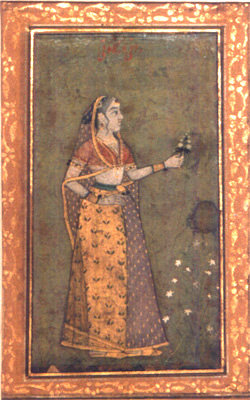
Rani Durgavati
Queen Regent of Gondwana (1524:-1564)
Durgavati, popularly known as Durgavati Chandel and Rani Durgavati, was the regent queen of Gondwana during her son Vir Narayan infancy from 1550 to 1564 AD. She married a Kachhwaha King named Dalpat Shah, the adopted son of the Gond King Sangram Shah. She is mainly remembered for her courage and sacrifice against the Mughal invasion of Gondwana.

Sambhaji Maharaj
Chhatrapati of the Marathas from 1681 to 1689
Sambhaji, also known as Shambhuraje, ruled from 1681 to 1689 as the second king (Chhatrapati) of the Maratha Empire, a prominent state in early modern India. He was the eldest son of Shivaji, the founder of the Maratha Empire.

Sarang Khan Gakhar
Gakhar chief from 1520 to 1541
Sarang Khan Gakhar was a 16th century Punjabi Muslim general and chief of the Gakhar clan in the northern Punjab region of modern day Pakistan. He became chief of his clan in 1520 after the death of Hathi Khan, and was confirmed on his position by the Mughal emperor Babur. He refused to recognise Suri usurpation of power from Humayun and died fighting against Sher Shah Suri at Rawat Fort in 1541 along with 16 of his sons.

Shivaji
Chhatrapati of the Marathas from 1674 to 1680
Shivaji I was an Indian ruler and a member of the Bhonsle dynasty. Shivaji inherited a jagir from his father who served as a retainer for the Sultanate of Bijapur, which later formed the genesis of the Maratha Kingdom. In 1674, he was formally crowned the Chhatrapati of his realm at Raigad Fort.
Sidhnak Mahar Inamdar
Indian dalit soldier (18th century)
Sidhnak Mahar Inamdar, also known as Sidhnak Mahar, was an Indian soldier of the Mahar Regiment. He belonged to the Mahar caste. He is popularly known for the Battle of Koregaon.

Sultan Balkhi
Ibrahim Shah Sultan Balkhi, also known by his sobriquet, Mahisawar, was a 14th-century Muslim saint. He is associated with the spread of Islam in Sandwip and Bogra.

Suraj Mal of Nurpur
Suraj Mal was a ruler of Nurpur, Himachal Pradesh in India. During a campaign to Kangra Fort, he rebelled against the Mughals, then he went into exile and died at Chamba. His brother, Raja Jagat Singh, succeeded him as ruler of Nurpur.

Tara Singh Wan
Sikh martyr
Tara Singh Wan was an eighteenth-century Sikh martyr. He was from the village of Wan, also known as Wan Tara Singh and Dall-Wan now in Tarn Taran district tehsil Bhikhiwind of the Eastern Punjab. After humbling the faujdar of Patti, he was killed while resisting a Mughal army dispatched by Zakaria Khan. Thus, Tara Singh was part of one of the first recorded Sikh military actions in the post-Banda Singh Bahadur period. He is remembered by Sikhs as one of their notable martyrs of the 18th century.
Thoma IV
Mar Thoma IV was the 4th Malankara Metropolitan of the Malankara Church in India, serving from 1688–1728. During his tenure, the church was subject to a number of persecutions.

Vishnupriya
Daughter of Indian Raj
Vishnupriya Devi a.k.a. Bishnupriya Debi Biṣṇupriẏā Dēbī, was the daughter of Sanatan Mishra, and the second wife of Chaitanya Mahaprabhu. According to Gaudiya Vaishnavism, she is believed to be reincarnation of the goddess Satyabhama, the third queen consort of Krishna in Dvaraka.
Yesubai Bhonsale
Queen of Swarajya from 1680 to 1689)
Yesubai Bhonsale was the wife of Chhatrapati Sambhaji Maharaj, and referred to as Maharani of the Maratha Kingdom. She was second officially coronated Queen of Swarajya. She was also mother of Chhatrapati Shahu I. Later on she became Rajmata in Chhatrapati Shahu I's reign. Chhatrapati Sambhaji had shared his power with Yesubai. When Chhatrapati Sambhaji was away from the maratha capital due to battles, all the political decisions were made by her.
Recommended Reading (0)
Coming soon: Documenting books written on this specific period.