Organized Indian Freedom Struggle
1885–1947
The final push through revolutionary and political struggles.
Historical Timeline
7th Century - 1947
Heroes of this Period (100)

Abdul Ghaffar Khan
South Asian politician and anti-colonial activist (1890–1988)
Khan Abdul Ghaffar Khan, also known as Bacha Khan and Badshah Khan, was an Indian independence activist from the North-West Frontier Province, and founder of the Khudai Khidmatgar resistance movement against British rule in colonial India. After the partition occurred, he became a Pakistani politician and led the Azad Party.

Abdul Habeeb Yusuf Marfani
Muslim businessman and philanthropist from India
Abdul Habeeb Yusuf Marfani was a Gujarati Muslim businessman and philanthropist from Dhoraji, Saurashtra, who made significant contributions to the Indian National Army (INA) led by Subhas Chandra Bose during India’s struggle for independence. He is best known for donating his entire fortune, approximately ₹1 crore, to the INA in 1944, earning him the Sevak-e-Hind medal, the highest civilian honour of the Azad Hind government.
Abdul Matin Chowdhury
Bangladeshi academic and physicist
Abdul Matin Chowdhury was a Bangladeshi academic and physicist. He served as the 15th Vice-chancellor of the University of Dhaka.
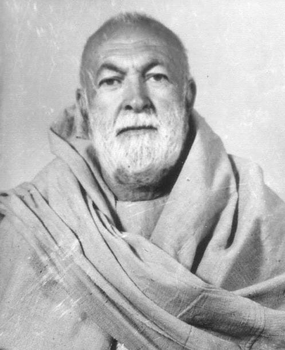
Abdul Samad Khan Achakzai
Pashtun nationalist and political leader (1907–1973)
Abdul Samad Khan Achakzai, commonly known as Khan Shaheed was a Pashtun nationalist and political leader from the then British Indian province of Baluchistan. He founded the Anjuman-i-Watan Baluchistan, which was allied with the Indian National Congress.
Abdur Rauf Danapuri
Indian Islamic scholar and political figure (d. 1948)
Abu al-Barakat Abdur Rauf Danapuri was an Islamic scholar, writer, physician, and political figure from British India. He was involved in religious scholarship, social work, and the Indian independence movement.

A. C. N. Nambiar
Indian Nationalist and friend and colleague of Subhas Chandra Bose
Arathil Candeth Narayanan Nambiar was an Indian Nationalist and a friend and colleague of Subhas Chandra Bose. Originally from Thalassery, Kannur, Kerala, Nambiar spent much of his life serving the Indian independence movement in Europe.
Adi Dharm
Religious movement from mid-19th century Bengal
Adi Dharm refers to the religion of Adi Brahmo Samaj the first development of Brahmoism and includes people of the Sadharan Brahmo Samaj who were reintegrated into Brahmoism after the second schism of 1878 at the instance of Devendranath Tagore. This was the first organised casteless movement in British India and reverberated from its heart of Bengal to Assam, Bombay State, Punjab and Madras, Hyderabad, and Bangalore.

Agnes Smedley
American journalist and writer
Agnes Smedley was an American journalist, writer and activist who supported the Indian Independence Movement and the Chinese Communist Revolution. Raised in a poverty-stricken miner's family in Missouri and Colorado, she dramatized the formation of her feminist and socialist consciousness in the autobiographical novel Daughter of Earth (1929).
Ahmad Saeed Dehlavi
Indian Muslim scholar (d. 1959)
Ahmad Saeed Dehlavi was an Indian Muslim scholar and freedom struggle activist who served as the first general secretary and the fifth president of Jamiat Ulama-e-Hind. He also served as the third rector of Madrasa Aminia and authored books such as Fear of Hell and Key to the Garden of Bliss.
Ahmaq Phaphoondvi
Indian Urdu writer and freedom fighter
Ahmaq Phaphoondvi (1895-1957) was the alias of Mohammad Mustafa Khan, an Indian Urdu poet, linguist, and freedom fighter. He is known for his contributions to literature, especially his satirical ghazals targeting the British Government of India. Phaphoondvi spent many years in the Aligarh jail for his active participation in the struggle for independence, including the Swaraj Movement and his association with the Indian National Congress.
Ahmed Ali Badarpuri
Indian Islamic scholar and activist
Ahmed Ali Badarpuri, also known as Ahmed Ali Banskandi and Ahmed Ali Assami, was an Indian Islamic scholar, a Sufi, a freedom fighter, and a teacher. He was the president of the Assam State Jamiat Ulama-e-Hind for 44 years.

A.K. Golam Jilani
Bengali revolutionary
A. K. Golam Jilani was a Bengali revolutionary of the Indian independence movement from the Nawabganj Upazila, Dhaka in present-day Bangladesh.
Akshay Ramanlal Desai
Indian sociologist (1915–1994)
Akshay Ramanlal Desai was an Indian sociologist, Marxist and a social activist. He was Professor and Head of the Department of Sociology in University of Bombay in 1967. He is particularly known for his work Social Background of Indian Nationalism in which he offered a Marxist analysis of the genesis of Indian nationalism making use of history, which set a path to build socialism in India.

Allan Octavian Hume
British political reformer, civil servant, and naturalist (1829–1912)
Allan Octavian Hume, CB ICS was a British political reformer, ornithologist, civil servant and botanist who worked in British India and was the founding spirit and key founder of the Indian National Congress. He was a proponent of Indian self-rule and strongly supported the idea of Indian independence. He supported the idea of self-governance by Indians. A notable ornithologist, Hume has been called "the Father of Indian Ornithology" and, by those who found him dogmatic, "the Pope of Indian Ornithology".
All India States Peoples Conference
Political movements in the British Raj
The All India States Peoples Conference (AISPC) was a conglomeration of political movements in the princely states of the British Raj, which were variously called Praja Mandals or Lok Parishads. The first session of the organisation was held in Bombay in December 1927. The Conference looked to the Indian National Congress for support, but Congress was reluctant to provide it until 1939, when Jawaharlal Nehru became its president, serving in this position till 1946. After the Indian Independence, however, the Congress distanced itself from the movement, allying itself with the princely rulers via its national government's accession relationships.
All Parties Conference
Group drafting the 1928 Indian constitution
The All Parties Conference was a group of Indian political parties known for organizing a committee in opposition to the Simon Commission to author the Constitution of India after independence was actualized. It was chaired by Dr. M. A. Ansari.

Allu Ramalingaiah
Indian actor, comedian and film producer (1922–2004)
Allu Ramalingaiah was an Indian character actor, comedian, and producer known for his works in Telugu cinema. In 1990, he was honoured with the Padma Shri for his contribution to Indian cinema. In 1998, he received the Filmfare Lifetime Achievement Award - South, and the Raghupathi Venkaiah Award in 2001. Ramalingaiah appeared in over 1000 films in a variety of roles. The "Allu Ramalingaiah National Award" was instituted in his memory by the "Allu Ramalingaiah Academy of Arts". The award is presented every year to a Telugu film personality for lifetime achievement. He is the father in law of Telugu hero Chiranjeevi. Surekha Konidala is his daughter.
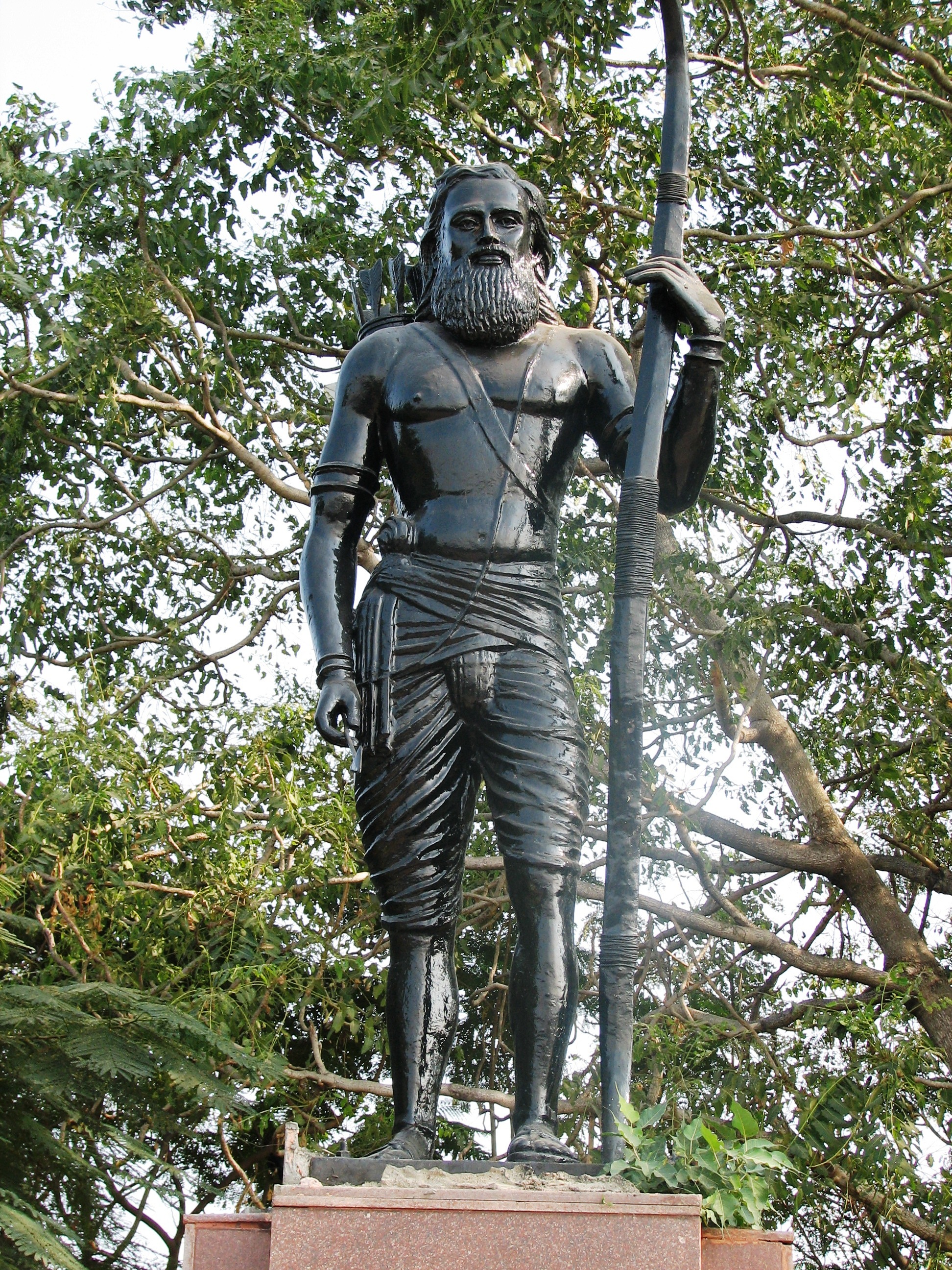
Alluri Sitarama Raju
Indian freedom fighter and revolutionary
Alluri Sitarama Raju was an Indian revolutionary who waged an armed rebellion against the British colonial rule in India. He engaged in guerilla campaigns against the British forces across the border regions of present-day Indian states of Andhra Pradesh and Odisha, and led the Rampa rebellion in 1922. He was known by the title "Manyam Veerudu" to the local people.
Amko Simko Massacre
Massacre in Odisha, India
The Amko Simko massacre or Amco Simco firing took place on 25 April 1939, when Lt. E. W. Marger ordered troops of the British Indian Army to open fire on a crowd of tribal peasants resisting the arrest of their leader Nirmal Munda in Simko village, Gangpur estate.
Ammembala Balappa
Ammembala Balappa was an Indian freedom fighter and socialist leader who is known for participating in the Quit India Movement in 1942. He played an important role in drafting the Declaration of land policy by the D. Devaraj Urs government during prime minister Indira Gandhi's tenure. He is also credited for founding the first Tulu language newspaper Tulu Siri in 1970.
A. M. Nair
Indian independence movement activist
Aiyappan Pillai Madhavan Nair (1905–1990), also known as Nair-san, was closely involved with the Indian independence movement in Japan during the 1920s through the 1940s.
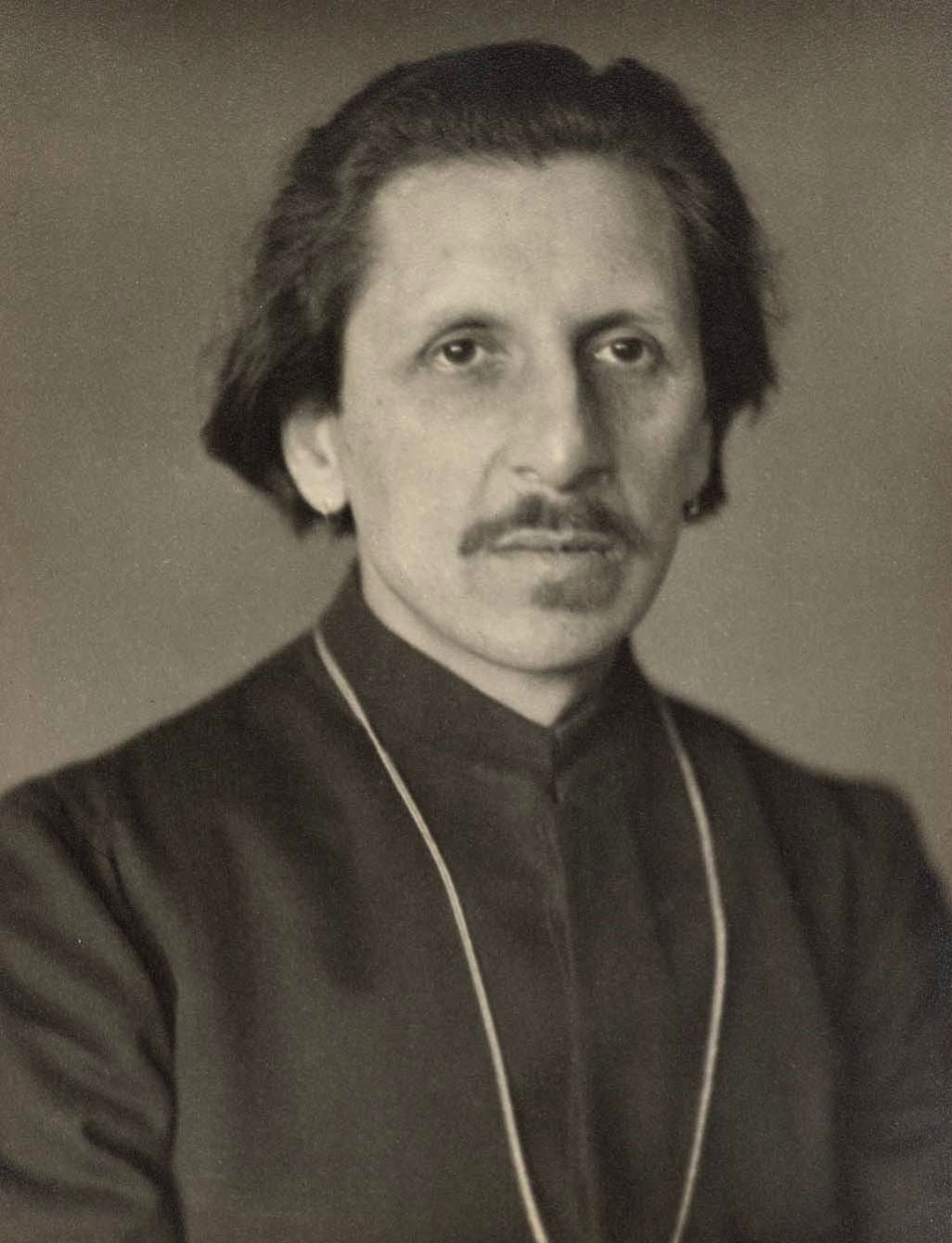
Ananda Coomaraswamy
Sri Lankan Tamil metaphysician (1877–1947)
Ananda Kentish Muthu Coomaraswamy was a Ceylonese metaphysician, historian and a philosopher of Indian art who was an early interpreter of Indian culture to the West. He has been described as "the groundbreaking theorist who was largely responsible for introducing ancient Indian art to the West".

Anjalai Ammal
Indian freedom fighter, social worker, reformer and politician
Anjalai Ammal Murugappan padaiyatchi was an Indian freedom fighter, social worker, reformer and politician from Cuddalore, Tamil Nadu. She spent seven and a half years in prison for her participation in the independence movement. She was among the early women to be elected to the Tamil Nadu State legislature, serving as a Congress MLA following her election victories in 1937 and 1946.

Annexation of Dadra and Nagar Haveli
Annexation by India
The Annexation of Dadra and Nagar Haveli was the process in which the territories of Dadra and Nagar Haveli passed from Portuguese rule to independent rule, with Indian allegiance, in 1954.

Anushilan Samiti
Fitness club and anti-British underground revolutionary organization
Anushilan Samiti was an Indian fitness club, which was actually used as an underground society for anti-British revolutionaries. In the first quarter of the 20th century it supported revolutionary violence as the means for ending British rule in India. The organisation arose from a conglomeration of local youth groups and gyms (akhara) in Bengal in 1902. It had two prominent, somewhat independent, arms in East and West Bengal, Dhaka Anushilan Samiti, and the Jugantar group.
Appannagouda Patil
Indian freedom fighter
Appannagouda Patil was a freedom fighter and prominent leader in the co-operative movement of Karnataka.
August Offer
1940 offer by the British government to India
The August Offer was an offer made by Viceroy Linlithgow in 1940 promising the expansion of the Viceroy's Executive Council to include more Indians, the establishment of an advisory war council, the giving of full weight to minority opinion, and the recognition of the Indians' right to frame their own constitution after the end of the war. In return, it was hoped that all parties and communities in India would co-operate in Britain's efforts during the Second World War. However, the proposal was rejected by the Indian National Congress.

A. Vaidyanatha Iyer
Indian activist
A. Vaidyanatha Iyer, also known as Madurai Vaidyanatha Iyer or Ayyar was an Indian activist, politician and freedom-fighter who spearheaded the temple entry movement in Madras Presidency in 1939.
A. V. Kuttimalu Amma
Indian activist (1905–1985)
A.V. Kuttimalu Amma or Anakkara Vadakkathu Kuttimalu Amma (1905-1985) was a freedom fighter, social worker and politician in India. She was a prominent figure in Civil disobedience movement.
Azad Gomantak Dal
Indian armed revolutionary organization
The Azad Gomantak Dal was an armed revolutionary organization that sought to liberate Goa from Portuguese colonial rule. Unlike non-violent movements advocating for Goa’s independence, the AGD engaged in armed resistance, believing that force was necessary to overthrow Portuguese rule.

Azad Hind
Indian provisional government during World War II
The Provisional Government of Free India or, more simply, Azad Hind, was a short-lived Japanese-controlled provisional government in India. It was established in exile in Japanese-occupied Singapore during World War II in October 1943 and has been considered a puppet government of the Empire of Japan.

Azad Hind Bank
Myanmar bank
Azad Hind Bank was established on 5 April 1944, at Rangoon, the then headquarters of the Provisional Azad Hind Indian government supported by Imperial Japan.

Baba Gurdit Singh
Indian revolutionary
Baba Gurdit Singh was an Indian Sikh entrepreneur and nationalist best known for organising the 1914 Komagata Maru voyage, a landmark episode in the history of anti-colonial resistance and struggles against racial discrimination.

Baba Gurmukh Singh
Baba Gurmukh Singh was a Ghadr revolutionary and a Sikh leader.

Babbar Akali movement
Sikh political party and militant group in British India (1921–1943)
The Babbar Akali movement was a 1921 splinter group of "militant" Sikhs who broke away from the mainstream Akali movement over the latter's insistence on non-violence over the matter of the restoration of Khalsa Raj in Punjab as under the prior Sikh Empire as well as gurdwara reforms in restoring pre-colonial gurdwara environments.

Babu Bhoop Singh
Ruler of Kohra and Leader of the Indian rebellion of 1857
Babu Bhoop Singh was one of the most prominent leaders in the Indian Rebellion of 1857 from the Oudh region, which is now part of the Indian state of Uttar Pradesh. He hailed from the Bandhalgoti clan of Rajputs and was the ruler of the Kohra (estate) in present-day Amethi district. He led a rebellion against the British forces in 1857. He took an active part in the Awadh War of 1857, playing a vital role in the siege of the Lucknow residency. To counter Colonel Wroughton's advances, he engaged in battles at Chanda, Amhat and Kadunala in the Sultanpur district. His property was taken under the management of Court of Wards. On order of Calcutta High Court, by government removed Court of Wards from Kohra. Later, the estate was ruled by Babu Shiv Dayal Singh.
Babu Chotelal Shrivastava
Indian independence activist (1889–1976)
Babu Chotelal Srivastava was an Indian independence activist in the area that would later become Chhattisgarh. He was born on 28 February 1889 in Kandel. His participation in national movements began after he met Pt. Sundarlal Sharma. In 1915, he established the Srivastava Library. His house in Dhamtari was a major center of the Indian independence movement. He was also among the principal organizers of the Dhamtari Tehsil Political Council in the year 1918. Chhotelal Srivastava was most famous for organizing the Kandel Nehar Satyagraha, a rebellion against the British Raj.

Badruddin Tyabji
Indian lawyer, activist, and politician (1844 – 1906)
Badruddin Tyabji was an Indian lawyer, activist, and politician during the British Raj. Tyabji was the first Indian to practice as a barrister of the High Court of Bombay. He also served as the third President of the Indian National Congress. He was one of the founding members and the first Muslim president of the Indian National Congress. He founded the Anjuman-i-Islam College in Bombay in 1874. It started with one school and today it has more than eighty institutions from pre-primary schools to graduate and postgraduate level. Tyabji is often referred to as the most prominent member of the Tyabji family.

Balai Chandra Dutt
Indian revolutionary (1906–1931)
Balai Chandra Dutt, also known as B.C. Dutt or Balai Chand Dutt, was an Indian sailor who was a prominent figure in the 1946 Royal Indian Navy mutiny. He is remembered for his significant role in the naval mutiny, a pivotal event that contributed to India’s path toward independence.

Bal Gangadhar Tilak
Indian self-rule activist (1856–1920)
Bal Gangadhar Tilak, was an Indian nationalist and self-rule activist in the Indian independence movement. He was one third of the Lal Bal Pal triumvirate.[5] The honorific "Lokmanya" was applied to him by his supporters.
Bangkok Conference
Indian nationalists form All-India Independence league
The Bangkok Conference was a conference held on 23 June 1942 by Indian Nationalist groups and local Indian Independence leagues at Bangkok to proclaim the formation of the All-India Independence league. The conference further saw the adoption by the league of a thirty-four set resolution known as the Bangkok resolutions that attempted to define the role of the league in the Independence movement, relations with the nascent Indian National Army, and clarify the grounds and conditions for obtaining Japanese support for it. The resolution further attempted to clarify the relations of Japan and the Greater East Asia Co-Prosperity Sphere with a free India.
Banwari Lal
Topics referred to by the same term
Banwari Lal may refer to:Banwari Lal (revolutionary), Indian revolutionary Banwari Lal (biotechnologist), Indian biotechnologist Banwari Lal Joshi, Indian civil servant and former Governor of the Indian state of Uttar Pradesh Banwarilal Purohit, Indian politician from Rajasthan Banwari Lal Agrawal, Indian politician from Chhattisgarh Banwari Lal Sharma, Indian politician from Madhya Pradesh Banwari Lal Hansaria, former judge of the Supreme Court of India Banwari Lal Chouksey, Indian machinist and inventor Banwari Lal, Indian politician from Haryana

Battaglione Azad Hindoustan
Military unit
Battaglione Azad Hindoustan was a foreign legion unit formed in Fascist Italy under the Raggruppamento Centri Militari in July 1942. The unit, raised initially as Centro I, was headed by Mohammad Iqbal Shedai – a long term Indian resident of Rome – and comprised Indian former prisoners of war from British India.
Bawani Imli massacre
1858 massacre
The Bawani Imli massacre was the execution of 52 Indian fighters including Jodha Singh Ataiya by British East India Company forces on 28 April 1858 during the Indian Rebellion of 1857. The executions took place on a tamarind tree, locally known as "Bawani Imli", 6 km from Bindki tehsil, and located 30 km from the town of Khajuha in Fatehpur district, Uttar Pradesh, India. This event is considered a significant yet often overlooked episode in Indian independence movement.

Bengal Renaissance
Cultural period of the 1800s to the 1930s in the Bengal region
The Bengal Renaissance, also known as the Bengali Renaissance, was a cultural, social, intellectual, and artistic movement that took place in the Bengal region of the British Raj, from the late 18th century to the early 20th century. Historians have traced the beginnings of the movement to the victory of the British East India Company at the 1757 Battle of Plassey, as well as the works of reformer Raja Rammohan Roy, considered the "Father of the Indian Renaissance," born in 1772. Nitish Sengupta stated that the movement "can be said to have … ended with Rabindranath Tagore," Asia's first Nobel laureate.

Berlin Committee
Pan-Indian independence think tank and conspiracy circle in WW1-era Germany
The Berlin Committee, later known as the Indian Independence Committee after 1915, was an organisation formed in Germany in 1914 during World War I by Indian students and political activists residing in the country. The purpose of the committee was to promote the cause of Indian Independence. Initially called the Berlin–Indian Committee, the organisation was renamed the Indian Independence Committee and came to be an integral part of the Hindu–German Conspiracy. Members of the committee included Virendranath Chattopadhyaya, Chempakaraman Pillai, Dr Jnanendra Das Gupta, and Abinash Bhattacharya.

B. G. Horniman
British journalist and supporter of Indian independence (1873–1948)
Benjamin Guy Horniman was a British journalist and editor of The Bombay Chronicle, particularly notable for his support of Indian independence.

Bhagat Ram Talwar
Indian revolutionary
Bhagat Ram Talwar (1908—1983), a Hindu Khatri from the Northwest Province of British India, was the only quintuple agent of World War II.

Bhagat Singh
Indian revolutionary (1907–1931)
Bhagat Singh was an Indian anti-colonial revolutionary who participated in the mistaken murder of a junior British police officer in December 1928 in what was intended to be retaliation for the death of an Indian nationalist. He later took part in a largely symbolic bombing of the Central Legislative Assembly in Delhi and a hunger strike in jail, which—on the back of sympathetic coverage in Indian-owned newspapers—turned him into a household name in the Punjab region, and, after his execution at age 23, a martyr and folk hero in Northern India. Borrowing ideas from Bolshevism and anarchism, the charismatic Bhagat Singh electrified a growing militancy in India in the 1930s and prompted urgent introspection within the Indian National Congress's nonviolent, and eventually successful, campaign for India's independence.
Bhag Singh
Indian revolutionary
Dr. Bhag Singh was an Indian anti-imperialist revolutionary, freedom fighter, Kisan leader and Communist politician who was an active member of the Ghadar Party during the Indian independence movement and later became one of the founding members of the Communist Party of India (Marxist).

Bhagwan Singh Gyanee
Indian politician
Bhai Bhagwan Singh Gyanee was an Indian Nationalist and a leading luminary of the Ghadar Party. Elected the party president in 1914, he was extensively involved in the Ghadar Conspiracy of 1915 during World War I and in the aftermath of its failure fled to Japan. He is also known for his nationalist poems that were published in the Hindustan Ghadar and later in the compilation Ghadar di Gunj. Convicted of violating U.S. neutrality laws, at the Hindu–German Conspiracy Trial, Singh was sentenced to 18 months in prison. Requests by the British government to deport him to India were rejected.

Bhagwati Charan Vohra
Indian revolutionary (1903–1930)
Bhagwati Charan Vohra was an Indian revolutionary, associated with Hindustan Socialist Republican Association. He was an ideologue, organiser, orator and campaigner.

Bhai Parmanand
Indian nationalist and prominent leader of the Ghadar Party and Hindu Mahasabha
Bhai Parmanand was an Indian nationalist and a prominent leader of the Ghadar Party and Hindu Mahasabha.

Bhai Vaidya
Indian politician (1928–2018)
Bhalchandra Vaidya, also known as Bhai Vaidya, was an Indian politician who served as the Home Minister of the Indian state of Maharashtra, a revolutionary, Member Maharashtra Legislative Assembly, Mayor of Pune, veteran Socialist leader and head of the Socialist Party of India.
Bharati Devi Ranga
Indian freedom fighter
Bharati Devi Gogineni, also known as Bharathi Devi and Bharati Devi Ranga (1908–1972), was an Indian freedom fighter and political figure. She participated in the Civil Disobedience Movement in 1932, facing a year-long sentence. She is known for organizing women Satyagrahis and Harijan Day Celebrations, advocating for inter-caste marriages. Elected in 1958, she served as a Member of the Andhra Pradesh Legislative Council. She was the spouse of farmer leader N. G. Ranga.

Bharat Mata
National personification of India
Bharat Mata is a national personification of India as a mother goddess. She is commonly depicted dressed in a red or saffron-coloured sari and in more contemporary iterations, holding a national flag; she sometimes stands on a lotus and is accompanied by a lion.
Bidadari Resolutions
The Bidadari Resolutions were set of resolutions adopted by the nascent Indian National Army in April 1942 that declared the formation of the INA and its aim to launch an armed struggle for Indian independence. The resolution was declared at a prisoner-of-war camp at the Bidadari in Singapore during Japanese occupation of the island.

Bindeshwari Dubey
Indian politician (1921–1993)
Bindeshwari Dubey was an Indian independence activist, trade unionist and politician who served as Chief Minister of Bihar between 12 March 1985 and 13 February 1988.

Bipin Chandra Pal
Indian academic and politician (1859–1932)
Bipin Chandra Pal was an Indian nationalist, writer, orator, social reformer, and freedom fighter. He was one third of the "Lal Bal Pal" triumvirate. He was one of the main architects of the Swadeshi movement. He is known as the Father of Revolutionary Thoughts in India. He also opposed the partition of Bengal by the British colonial government.

Bivabati Bose
Indian social activist and wife of Sarat Chandra Bose
Bivabati Bose was a Gandhian social activist and a revolutionary of the Indian independence movement. She was married to Sarat Chandra Bose, an Indian nationalist leader and barrister, and played significant role in supporting nationalist activities and political engagements of her husband and her brother-in-law, Subhas Chandra Bose.
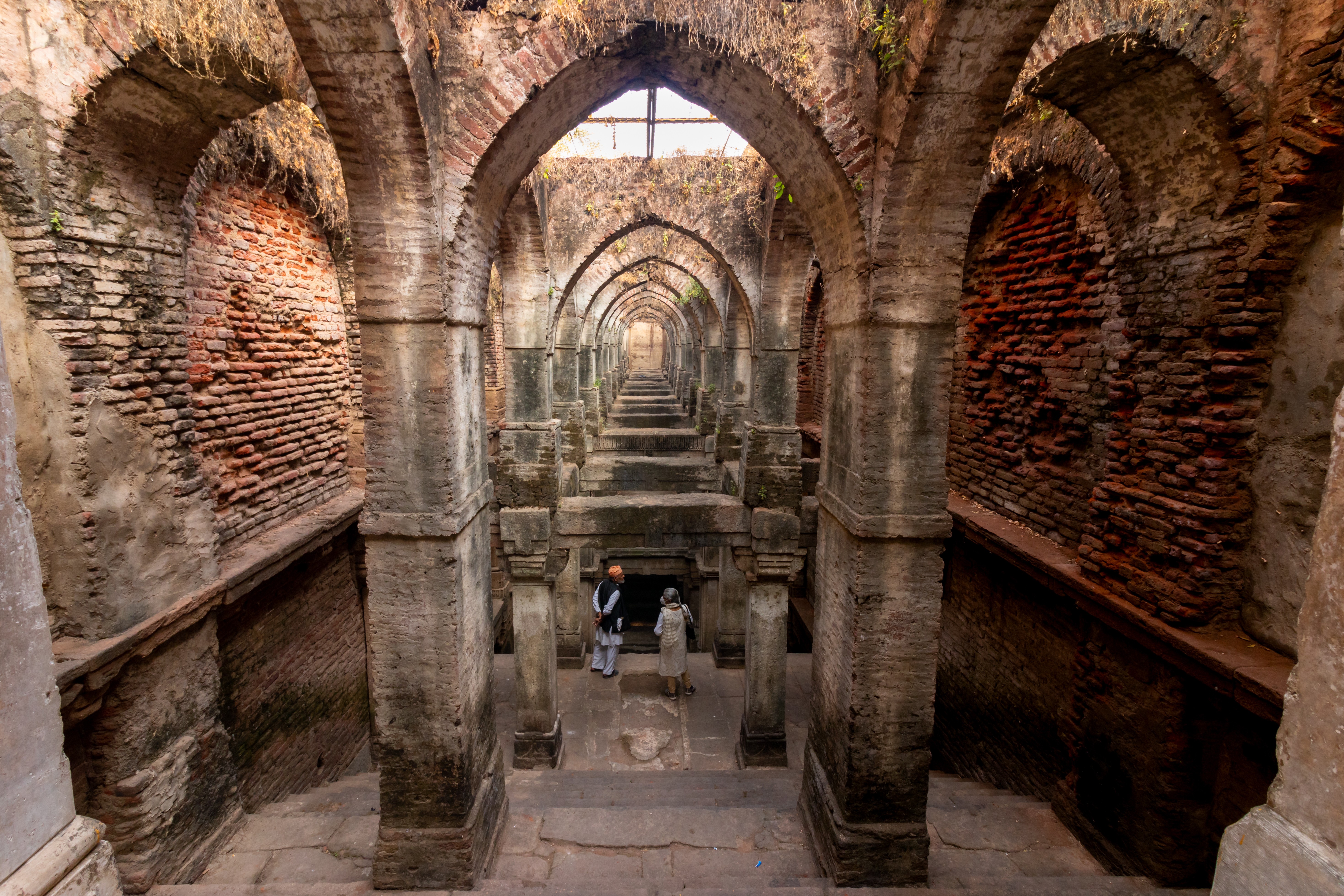
Borsad
Town in Gujarat, India
Borsad is a town and a municipality in Anand district in the state of Gujarat, India. It is located around 17 km from Anand. It is surrounded by the fertile Charotar region which largely produces tobacco, bananas, cotton, barley and other agricultural crops. Borsad was the seat of the Borsad satyagraha in 1922–23.

B. P. Koirala
Nepalese politician and writer
Bishweshwar Prasad Koirala, better known as B. P. Koirala, was a Nepali revolutionary, political leader, and writer. He was the Prime Minister of Nepal from 1959 to 1960. He led the Nepali Congress, a social democratic political party. He was the grandfather of Bollywood actors Manisha Koirala and Siddharth Koirala, the elder brother of former prime minister Girija Prasad Koirala and the younger brother of former prime minister Matrika Prasad Koirala.
Bradlaugh Hall
Historic hall in Lahore, Punjab, Pakistan
Bradlaugh Hall is a historic hall located in Lahore, Punjab, Pakistan. It was founded in the memory of a British member of the parliament, Charles Bradlaugh. It hosted the meetings of the Congress during the Indian independence movement.
Brahmoism
Hindu religious movement from mid-19th century Bengal, India
Brahmoism is a Hindu religious movement which originated from the mid-19th century Bengali Renaissance, the nascent Indian independence movement. Adherents, known as Brahmos, are mainly of Indian or Bangladeshi origin or nationality.
British Committee of the Indian National Congress
1889 organisation
The British Committee of the Indian National congress was an organization established in Britain by the Indian National Congress in 1889. Its purpose was to raise awareness of Indian issues to the public in Britain, to whom the Government of India was responsible. It followed the work of W.C. Bonnerjee and Dadabhoi Naoroji, who raised India related issues in the British parliament through the support of radical MPs like Charles Bradlaugh. William Wedderburn served as the first chairmanship and William Digby as secretary.

B. T. Ranadive
Indian politician (1904–1990)
Bhalchandra Trimbak Ranadive, popularly known as BTR, was an Indian communist politician and trade union leader.
B. V. Kakkilaya
Indian freedom fighter
Bevinje Vishnu Kakkilaya was an Indian independence activist, writer and a senior leader of the Communist Party of India. Following India's independence, he served as a member of the Rajya Sabha, the upper House of the Parliament of India, and as member of the Karnataka Legislative Assembly.

C. Achutha Menon
Former chief minister of Kerala
Chelat Achutha Menon was an Indian politician and lawyer who served as the 4th Chief Minister of Kerala from November 1969 to August 1970 and again from October 1970 to 1977. He is viewed as one of the most influential Chief Ministers of Kerala.
Caroline Anthonypillai
Caroline Anthonypillai was the wife of S. C. C. Anthonypillai, a Sri Lankan union organizer and Indian politician. An activist in her own right, she was eulogized as a "leading light of the leftist movement".
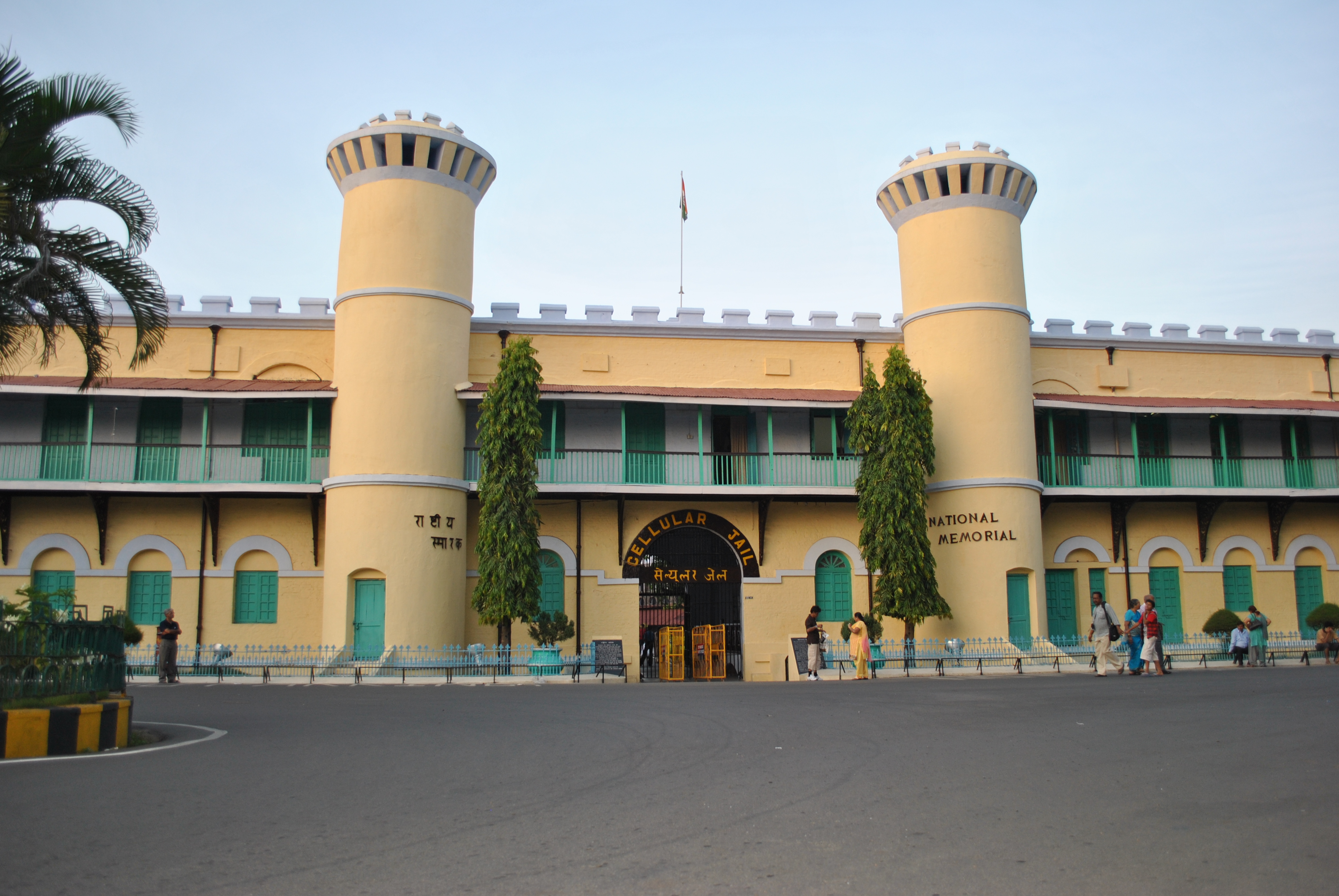
Cellular Jail
British colonial prison in modern day India
The Cellular Jail, also known as 'Kālā Pānī', was a British colonial prison in the Andaman and Nicobar Islands. The prison was used by the colonial government of India for the purpose of exiling insurgents and political prisoners. Many notable independence activists were imprisoned there during the struggle for India's independence. Today, the complex serves as a national memorial monument.
CGK Reddy
Indian activist, freedom fighter and politician (1921–1994)
Cattamanchi Gopala Krishnamoorthy Reddy, commonly referred to as CGK Reddy, was an Indian activist, freedom fighter and politician. He was the first general manager of the Deccan Herald, a business manager at The Hindu, editor of Prajavani, founder director of the Research Institute of Newspaper Development (RIND), in Taramani, Chennai and former president of The Indian Newspaper Society. During the Emergency, he collaborated closely with George Fernandes, notably as part of the Baroda dynamite case. He helped to found the People's Union for Civil Liberties, and served as President of the Karnataka chapter.

Chakhi Khuntia
Jagannath Temple priest and poet (1827–1870)
Chandan Hajuri popularly known as 'Chakhi Khuntia' was a Jagannath Temple priest and a poet who participated in the Indian Rebellion of 1857.

Chapekar brothers
Indian revolutionaries who assassinated a British official in Pune (1897)
The Chapekar Brothers, Damodar Hari Chapekar, Balkrishna Hari Chapekar and Vasudeo Hari Chapekar, also spelt Wasudeva or Wasudev, were Indian revolutionaries involved in assassinating W. C. Rand, the British Plague Commissioner of Poona, after the public of Poona were frustrated with the actions of officers and soldiers appointed by him. Mahadev Vinayak Ranade was also an accomplice in the assassination.

Charles Freer Andrews
Christian missionary and social reformer in India (1871–1940)
Charles Freer Andrews was an Anglican priest and Christian missionary, educator and social reformer, and an activist for Indian independence. He became a close friend of Rabindranath Tagore and Mahatma Gandhi and identified with the Indian liberation struggle. He was instrumental in persuading Gandhi to return to India from South Africa, where Gandhi had been a leading light in the campaign for Indian civil rights.

Chempakaraman Pillai
Indian-born political activist
Chempakaraman Pillai was an Indian-born political activist and revolutionary. Born in Thiruvananthapuram, he left for Europe as a youth, where he spent the rest of his active life as an Indian nationalist and revolutionary.

Chicago Radio
Indian manufacturer of public address systems
Chicago Radio is an Indian manufacturer of public address systems, closely associated with the pro-independence Indian National Congress during the last decades of the British Raj. The company was established by Gianchand Chandumal Motwane in 1909 as the Eastern Electric & Trading Company. It changed its name to the Chicago Telephone Supply Company in 1919 when it moved from Sindh to Bombay. The company served as a distributor for an American company of the same name, but retained the branding when the American firm went out of business. Under Gianchand's son Nanik the company began a close association with the Congress, providing public address systems at numerous meetings and speeches. The company provided this support on a pro bono basis until the 1960s. It remains in business on a small scale, as Motwane Communication Systems Pvt. Ltd.
Chimaji Jadhav
Indian revolutionary
The Chimaji Jadhav was Indian freedom fighter from Maharashtra in India and he led the rebellion from 1839 to 1846. He revolted against British government along with his supporters Nana Darbare and Bhau Khare to re-established the deposed Peshwa on the Maratha throne.

Chittagong armoury raid
1930 uprising in British India
The Chittagong Uprising termed by the British as Chittagong Armoury Raid, was an attempt on 18 April 1930 to raid the armoury of police and auxiliary forces from the Chittagong armoury of Bengal Province in British India by armed Indian independence fighters led by Surya Sen.

Choithram Gidwani
Dr. Choithram Gidwani was born at Hyderabad (Sind) on 25 December 1889 and received his entire education there. After passing the matriculation examination his spirit of service impelled him to accept a teacher's job at Bubak in Dadu District, but finding little scope for his activities there he chucked it up returning to Hyderabad, he joined the Medical School there, and after completing the course he entered Government service as a Medical Officer. Dr. Choithram came in contact with Mahatma Gandhi at the Congress Session held in Bombay in 1915. In the following year, he attended the Session at Lucknow as a delegate from Sind. He successfully organised 'hartal' at Hyderabad in March 1919 in protest against the Rowlatt Act. Dr. Choithram was sent to jail several times, first in 1922 when as editor of the "Hindu" his writings were regarded as seditious; then in 1930 when he broke the Salt Law at Karachi; again during the Civil Disobedience Movement of 1932 and also in 1933 for defying the Govt. orders not to leave Hyderabad; in 1940 for making a fiery speech at Lahore; and finally in 1942 for joining the Quit India Movement launched by Gandhiji. Whenever outside jail, besides attending to his political activities he did valuable humanitarian work such as running a charitable dispensary, supplying medicines to the poor and the needy free of charge, collecting donations for Pathshalas and Narishalas, organising relief work during floods and earthquakes as also during communal riots, and taking measures to prevent persecution of one community at the hands of the other. He died in the Northcote Nursing Home at Bombay on the night of 13 September 1957. Dr. Choithram was an embodiment of service and self-sacrifice. Way back in 1924 Gandhiji wrote about him in the Young India - "He has sacrificed everything and turned into a 'Faqir' all for the cause of his country."

Chowdary Satyanarayana
Andhra politician (1908–1981)
Chowdary Satyanarayana, also known as Jananayaka Chowdary Satyanarayana, was an Indian freedom fighter, anti-colonial nationalist, politician, legislator in Andhra Pradesh Assembly and a civil rights activist.

Colvin R. de Silva
Sri Lankan politician
Colvin Reginald de Silva was a Sri Lankan Cabinet Minister of Plantation Industries and Constitutional Affairs, prominent member of parliament, Trotskyist leader and lawyer in Sri Lanka. He was one of the founders of the Lanka Sama Samaja Party, the first Marxist party in Sri Lanka.
Communal Award
1932 statement on minority electorates in British India
The Communal Award was created by British Prime Minister Ramsay MacDonald on 16 August 1932. Also known as the MacDonald Award, it was announced after the Round Table Conference (1930–1932) and extended the separate electorate to the Depressed Classes and other minorities. The separate electorate had been introduced by the Indian Councils Act 1909 for the Muslims and extended to the Sikhs, Indian Christians, Anglo-Indians and Europeans by the Government of India Act 1919.
Communist involvement in the Indian independence movement
Communists were actively involved in Indian independence movement through multiple series of protests, strikes and other activities. It was a part of revolutionary movement for Indian independence. Their main thrust was on organising peasants and working classes across India against the British and Indian capitalists and landlords.

Congress Radio
1942 underground radio station in India
Congress Radio, also known as Azad Radio, was an underground radio station that operated for about three months during the Quit India Movement of 1942, a movement launched by Mahatma Gandhi against the British Raj for independence of India. Congress Radio was the broadcasting mouthpiece of the Indian National Congress and functioned from different locations in Bombay, present-day Mumbai, and briefly from Nashik. It was organized by Usha Mehta (1920–2000), then a 22-year student activist, with the help of amateur radio operators. Others who were involved included Vithalbhai Jhaveri, Vitthaldas Khakar, Chandrakant Jhaveri, and Babubhai Thakkar. The broadcasting equipment was supplied by Nanik Motwane of Chicago Radio, Bombay. Prominent leaders of the Indian independence movement like Ram Manohar Lohia, Achyutrao Patwardhan, and Purushottam Trikamdas were also associated with Congress Radio.
Coolie-Begar movement
Movement
The Coolie-Begar or Coolie- Utar movement was a non-violent movement by the general public of Kumaun in the Bageshwar town of United Provinces in 1921. This movement was led by Hargovind Pant and Badri Datt Pandey, who were awarded the titles of 'Jannayak' and 'Kumaon Kesari' respectively after the success of this movement. The aim of this movement was to put pressure on the British to end the practice of Coolie-Begar. Mahatma Gandhi, while praising the movement, named it 'Bloodless Revolution'.
Cripps Mission
Attempt by the British government to secure Indian assistance in WWII
The Cripps Mission was a failed attempt in late March 1942 by the British government to secure full Indian cooperation and support for their efforts in World War II. The mission was headed by a senior minister Stafford Cripps. Cripps belonged to the left-wing Labour Party, which was traditionally sympathetic to Indian self-rule, but he was also a member of the coalition War Cabinet led by British Prime Minister Winston Churchill, who had long been the leader of the movement to block Indian independence.

Dadabhai Naoroji
Indian politician, scholar and writer (1825–1917)
Dadabhai Naoroji was an Indian political leader, merchant, scholar, and writer who played a role in both Indian and British public life. He was among the founding members of the Indian National Congress and served as its President on three occasions, from 1886 to 1887, 1893 to 1894 and 1906 to 1907. Naoroji's early career included serving as the Diwan of Baroda in 1874. Subsequently, he moved to England, where he continued to advocate for Indian interests. In 1892, he was elected to the House of Commons as a Liberal Party Member of Parliament, representing Finsbury Central until 1895. He was the second person of Asian descent to become a British MP following David Ochterlony Dyce Sombre, who was an Anglo Indian MP.
Datta Tamhane
Loading biography...
Dawn (Bengali educational society)
The Dawn Society was established in July 1902 in Calcutta, British India under the stewardship of Indian educationalist Satish Chandra Mukherjee. The organisation arose in response to agitation against the report of the Indian Universities Commission 1902 which was seen to be align more power within the Colonial settlers. At a time of rising nationalism in India, the Dawn Society, through its magazine of the same name, sought to promote Indian views, achievements, heritage and success. The members of the society included noted intellectuals and intelligentsia of Bengal of the time, including Rabindranath Tagore, Aurobindo Ghosh, Rajendra Prasad, Raja Subodh Chandra Mullick, Radha Kumud Mukherjee and Brajendra Kishore Roychowdhury and others. The work of the society saw the founding of the National Council for Education in 1905.
Dawn (Indian educationalist magazine)
Dawn was an English-language magazine launched in 1897 by Indian Bengali educationalist Satish Chandra Mukherjee. The magazine arose at a time of growing nationalism in India and particularly Bengal in the last part of the 19th century, and propagated Mukherjee's views on national education in the context of the emerging nationalist movement in India, and promoted Mukherjee's message of recalling India's cultural and philosophical heritage. The magazine achieved widespread circulation by early 1900s, and particularly criticised the movement towards colonial domination of institutes of higher education that became ratified in the Universities bill, 1904. The magazine was considered a journal of high standard and taste amongst Bengali intelligentsia. The magazine went on to lend its name to a society that arose from a conglomeration of Bengali intellectuals and eminent scientists who contributed to the magazine, and articles appeared on various subjects including Science, technology and similar subjects focussed on the needs in the society. The magazine was published monthly, in English. Each number of the journal was divided into three parts. Lal Mohan Mullick served as the publisher, Mukherjee contributed as editor in a number of Science-themed articles, and in a dedicated column entitled Indiana, he wrote on many aspects of Indian civilisation.
Day of Deliverance
1939 All-India Muslim League celebration
The Day of Deliverance was a celebration day marked by the All-India Muslim League and others on 22 December 1939 during the Indian independence movement. It was led by the Muslim League's president Muhammad Ali Jinnah and was intended to celebrate the resignation of all members of the rival Indian National Congress party from provincial and central offices in protest over their not having been consulted over the decision to enter World War II alongside Britain.
Deendayal Gupta
Indian independence activist and politician
Deendayal Gupta was an Indian independence activist and politician affiliated with the Indian National Congress (INC), who was elected to the Madhya Pradesh Legislative Assembly in 1952. He served as Minister of Food of Madhya Pradesh in the Ravishankar Shukla government. He also served as Food, Rehabilitation & Social Welfare Minister of Bombay State from 1956 to 1957. In 1957, he was elected to the Maharashtra Legislative Assembly and served as its Vice President.

Delhi conspiracy case
1912 assassination attempt in British India
The Delhi Conspiracy case, also known as the Delhi-Lahore Conspiracy, refers to an attempt made in 1912 to assassinate the then Viceroy of India, Lord Hardinge by throwing a local self-made bomb of Anushilan Samiti by Basanta Kumar Biswas, on the occasion of transferring the capital of British India from Calcutta to New Delhi. Hatched by the Indian revolutionaries underground in Bengal and Punjab and headed by Rash Behari Bose, the conspiracy culminated in the attempted assassination on 23 December 1912, when a homemade bomb was thrown into the Viceroy's howdah as the ceremonial procession was moving through the Chandni Chowk suburb of Delhi.

Deshbandhu Gupta
Indian freedom fighter and legislator and journalist (1901–1951)
Deshbandhu Gupta, also known as Lala Deshbandhu Gupta, was an Indian freedom fighter, politician, and journalist. He served as a member of the Punjab Provincial Assembly, having won the 1937 election representing the Indian National Congress. He was also a member of the Constituent Assembly of India.

Devdas Gandhi
Son of Mahatma Gandhi and Indian activist
Devdas Mohandas Gandhi was the fourth and youngest son of Mahatma Gandhi and Kasturba Gandhi. He was born in the Colony of Natal and came to India with his parents as a grown man. He became active in his father's movement, spending many terms in jail. He also became a prominent journalist, serving as editor of Hindustan Times. He was also the first pracharak of the Dakshina Bharat Hindi Prachar Sabha (DBHPS), established by Mohandas Gandhi in Tamil Nadu in 1918. The purpose of the Sabha was to propagate Hindi in southern India.

Devidutt Pant
Devidutt Pant was an Indian freedom fighter and founder of Bikaner Khadi Bhandar in Bikaner city of Rajasthan state in India. He was born in Khantoli in the middle Himalayan range of Kumaun district located at 5000’ altitude. He moved to Rajasthan around 1927 from Kumaon.
Dhirajlal Desai
Indian diplomat and independence activist
Dhirajlal B. Desai, popularly known as Dhirubhai, was an Indian diplomat and independence activist. He served as India's first ambassador and plenipotentiary minister to Switzerland. He also served as the President of the Bombay Provincial Congress Committee (BPCC) in 1941. He was born in Bombay, British India and was the son of lawyer and leader, Bhulabhai Desai.
Dilip Bagchi
Indian Bengali politician
Dilip Bagchi was a Bengali mass singer, educationist and political activist. He was an active member of Indian People's Theatre Association of West Bengal.

Doreen Young Wickremasinghe
British leftist who became a prominent Communist politician
Doreen Wickremasinghe was a British leftist who became a prominent Communist politician in Sri Lanka and a Member of Parliament (MP). She was one of the handful of European Radicals in Sri Lanka.

Durgawati Devi
Indian female revolutionary 1907 – 1999)
Durgavati Devi, popularly known as Durga Bhabhi, was an Indian revolutionary and freedom fighter. She was one of the few women revolutionaries who actively participated in armed revolution against the ruling British Raj. She is best known for having accompanied Bhagat Singh on the train journey in which he made his escape in disguise after the killing of John P. Saunders. Since she was the wife of another Hindustan Socialist Republican Association (HSRA) member Bhagwati Charan Vohra, other members of HSRA referred to her as Bhabhi and became popular as "Durga Bhabhi" in Indian revolutionary circles.
Recommended Reading (1)

Inglorious Empire: What the British Did to India
by Shashi Tharoor
In the 18th century, India's share of the world economy was as large as Europe's. By 1947, after two centuries of British rule, it had decreased six-fold. Beyond conquest and deception, the Empire blew rebels from cannons, massacred unarmed protesters, entrenched institutionalized racism, and caused millions to die from starvation. British imperialism justified itself as enlightened despotism for the benefit of the governed, but Shashi Tharoor takes on and demolishes this position, demonstrating how every supposed imperial "gift" - from the railways to the rule of law - was designed in Britain's interests alone. He goes on to show how Britain's Industrial Revolution was founded on India's deindustrialization and the destruction of its textile industry. In this bold and incisive reassessment of colonialism, Tharoor exposes to devastating effect the inglorious reality of Britain's stained Indian legacy.
Inglorious Empire: What the British Did to India
by Shashi Tharoor