Resistance to British East India Company Expansion
1757–1856
Resistance to British East India Company Expansion
Historical Timeline
7th Century - 1947
Heroes of this Period (27)
Amara Sullia Rebellion
Armed uprising against British Rule in British India
The Amara Sullia Rebellion was an armed uprising against the British government organized by the people of Arebhashe, Kodava people, and Tulunadu that took place in 1837, twenty years before the Sepoy Mutiny of 1857.
Anglo-Khasi War
The Anglo-Khasi War was part of the independence struggle between the Khasi people and the British Empire between the years 1829-1833. The war started with Tirot Sing's attack on a British garrison that disobeyed orders of this Khasi King to stop a road and sanatorium construction project through the Khasi Hills. The Khasis were defeated in this war and the British gained supremacy over these hills.

Bajal Soren
Tribal freedom fighter
Bajal Soren also known as Bir Bajal was an Indian freedom fighter from Santal community. Along with the entire Santal community he was also victimized of the atrocities by money lender under British Empire during 1850-55 even before Santal Revolt which took place in (1855–1856).

Bakshi Jagabandhu
Indian freedom fighter from Odisha
Jagabandhu Bidyadhara Mohapatra Bhramarbara Raya popularly known as Buxi Jagabandhu was the commander (Buxi) of the forces of the king of Khurda. He is one of the earliest freedom fighters of India. The great Paika rebellion in 1817 was under his leadership. The BJB College in Bhubaneswar has been named after this great personality.
Bastar rebellion
1910 tribal rebellion in British India
The Bastar Rebellion, also known as the Bhumkal Movement was an Adivasi rebellion in 1910 against the British Raj in the princely state of Bastar. Its central part is located on a plateau North of this plateau is chhattisgarh plain and South of this plateau is godavari plain. It was primarily led by Gunda Dhur, a tribal leader, as well as by a diwan and cousin of the king, Lal Karendra Singh. The tribals mobilized, which led to the entire state rising in revolt against the British colonial government, overwhelming the small 250-strong police force in the state, and was marked by widespread rioting, looting and arson. By the end of February, however, additional troops from neighbouring Jeypore and Bengal had quelled the revolt and arrested the leaders.
Battle of Kikrüma
1851 Indian colonial conflict
The Battle of Kikrüma was fought on 11 and 12 February 1851 in Northeast India between the warriors of Kikrüma village and the forces of the British East India Company. The battle, in which Naga warriors of the Eastern Angamis armed with only spears and bows and arrows fought against British soldiers armed with rifles, was one of the bloodiest battles fought in the hills of Northeast India. While the battle is not very well known in other parts of India or the world, the battle is remembered through oral stories of the local people and has been written about by a British officer Major John Butler.

Birsa Munda
Indian tribal freedom fighter and religious leader (1875–1900)
Birsa Munda was an Indian tribal independence activist, and folk hero who belonged to the Munda tribe. He spearheaded a tribal religious millenarian movement that arose in the Bengal Presidency in the late 19th century, during the British Raj, thereby making him an important figure in the history of the Indian independence movement. The revolt mainly concentrated in the Munda belt of Khunti, Tamar, Sarwada and Bandgaon.

Budhu Bhagat
Leader of Kol Uprising (1792-1832)
Budhu Bhagat was an Indian rebel. He had led guerrilla warfare against British. He was leader of Kol rebellion and Larka rebellion in 1831-32 in Chhotanagpur.
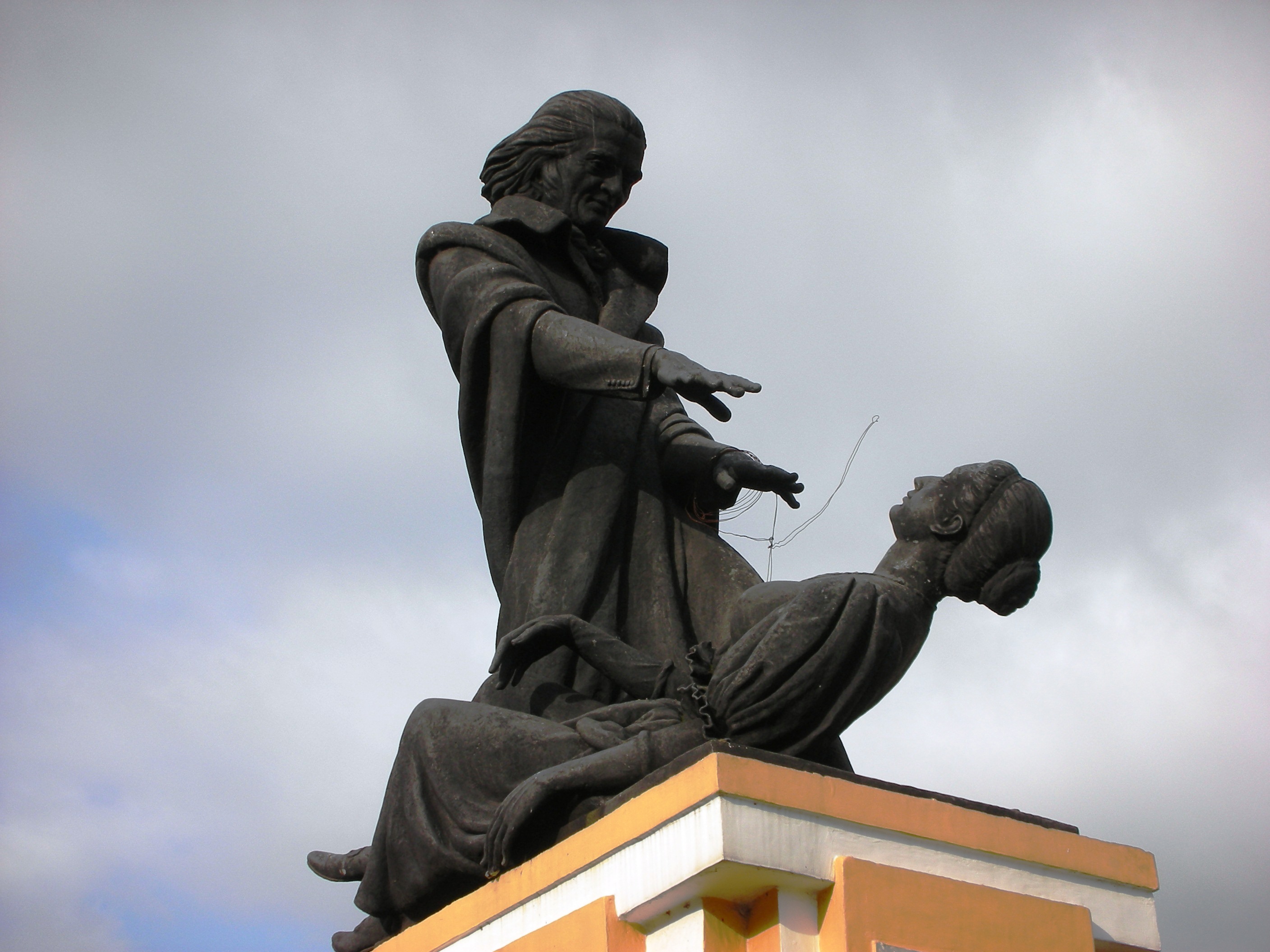
Conspiracy of the Pintos
1787 rebellion against Portuguese rule in Goa
Conspiracy of the Pintos, also known as the Pinto Revolt or the Pinto Conspiracy, and in Portuguese as Conjuração dos Pintos, was a rebellion against the Portuguese rule in Portuguese Goa in 1787. The leaders of the plot were three prominent priests from the village of Candolim in the concelho of Bardes, Goa. The highest-ranked leaders belonged to the Pinto clan of Candolim, hence the name of the rebellion. The Pintos were a Goan noble family and later vassals of Peshwa Baji Rao II in the Maratha Confederacy. They were one of the wealthiest and noblest families in Goa during the 18th century.
Dudu Miyan
Bengali Muslim leader (1819–1862)
Muḥsin ad-Dīn Aḥmad (1819–1862), better known by his nickname Dudu Miyān, was a leader of the Faraizi Movement in Bengal. He played an active role in the Indian Rebellion of 1857.
Gam Malludora
Indian politician and tribal leader
Gam Malludora (1900–1969) was an Indian politician and tribal leader who served as a Member of Parliament from Visakhapatnam Lok Sabha constituency. He was born in [Nadimpalem] village Koyyuru mandal of Visakhapatnam district, Andhra Pradesh, in 1900, his belongings to Bagata tribal community. He was the younger brother of Gam Gantamdora. Their father was Gam Boggudora.
Gunda Dhur
Indian tribal leader
Gunda Dhur was a tribal leader from village Nethanar in Jagdalpur tehsil, of Bastar district, in present-day Chhattisgarh. He played a major role in 1910 rebellion of the Dhurwas of Kanger forest in Bastar, and led the rebellion. He is considered as a hero by many tribals of Bastar.He was one of the prominent leaders who lead the Bastar rebellion, however gunda dhur was never captured by Britisher's, gunda dhur can also be seen as a prominent leader in 1910 rebellion, the 1910 rebellion occur in india on the issue of reservation by the Britisher's, reservation was a big problem for the tribal people, taking their land and displacing them out of their mother village, and the wrath among the people's of the village led to the rebellion of 1910.
Jangal Santhal
Indian politician (1925–1988)
Jangal Santhal, also known as Jangal Santal was an Indian political activist.
Kuyili
Woman Commando of Velu Nachiyar
Veeramangai Kuyili was an army commander of queen Velu Nachiyar who participated in campaigns against the East India Company in the 18th century. She is considered the first suicide bomber and "first woman martyr" in Indian history.

Mir Sher Muhammad Talpur
3rd Mir of Mirpur Khas
Mir Sher Muhammad Talpur was the last Mir of Mirpur Khas who belonged to the Manikani house of the Talpur dynasty. The son of Mir Ali Murad Talpur, the founder of Mirpur Khas, he ascended the throne in 1829 and held onto it until he was defeated in the Battle of Hyderabad in 1843.
Nilamber and Pitamber
Brothers and freedom fighters from India
Nilamber and Pitamber were tribal brothers and freedom fighters from Jharkhand, eastern India, who led a revolt against the East India Company during the Indian Rebellion of 1857. They were born into a family of Bhogta clan of Kharwar tribe in the village Chemo-Senya in Latehar district, a Chotanagpur plateau region of Jharkhand. Their father, Chemu Singh, was Jagirdar. They decided to declare themselves independent of company rule, inspired by the Doronda Revolt in Ranchi led by Thakur Vishwanath Shahdeo and Pandey Ganpat Rai. Chero Jagirdar Devi Baksh Rai joined them.

Nirmal Munda
Indian politician and veteran (1893–1973)
Nirmal Munda was an agrarian leader, a freedom fighter and a World War I veteran from the Munda tribe from Bartoli village in the former princely state of Gangpur. He was the leader of the Munda agitation of 1937–39, who organised the tribals of Gangpur to refuse to pay exorbitant taxes and demanded khuntkatti rights.
Pagal Panthis
18th-19th century socio-religious order founded by Karam Shah
The Pagal Panthis were a socio-religious order that emerged in the late 18th-century in the Mymensingh region of Bengal. Karam Shah a Sufi saint was the founder of that order. Adherents of a syncretic mixture of Hinduism, Sufism and Animism, the order sought to uphold religious principles and the rights of landless peasants in Bengal; under the leadership of Karam Shah's son Tipu Shah, the movement soon evolved into a popular, armed struggle against the British East India Company and the zamindar (landlord) system. It was crushed with the help of the army in 1833. It was a semi religious sect having influence in the northern districts of Bengal. Pagal panthi was the movement of Hodi, Garo and Hajong tribes. It was led by the Hodi leader Janku Pathar and Debraj Pathar.
Periya Kaladi
Indian general from Tamil Nadu
Venni Kaladi, also known as "Periya Kaladi, was an 18th-century CE general from Tamil Nadu, India

Puli Thevar
Palaiyakkarar of Nerkattumseval
Puli Thevar was a Tamil Palaiyakkarar who ruled Nerkattumseval, situated in the Sankarankoil taluk, Tenkasi, formerly Tirunelveli Tamil Nadu. He is notable for fighting against East India Company from May 22, 1752 - 1767 in India. His son in law Vadakarai king are the generals of Thevar's army, to fight against the East India Company. He is known for the Polygars revolt against the British. He maintained a good relationship with the Kingdom of Travancore.

Telanga Kharia
Indian tribal freedom fighter (1806–1880)
Telanga Kharia was a great Indian tribal freedom fighter, who spearheaded a rebellion against the British Raj in Chotanagpur Region during 1850-1860.

U Kiang Nangbah
Jaiñtia freedom fighter
U Kiang Nangbah was a Jaiñtia freedom fighter from Meghalaya who led an uprising against the British. He was hanged by the British publicly at Iawmusiang in Jowai town in West Jaintia Hills district on 30 December 1862. A postage stamp was issued by Government of India to commemorate him in 2001. A government college was also opened at Jowai in 1967 in his honour. He was born at Tpeppale Jowai after annexation of the Brahamaputra Valley.

Umaji Naik
Indian revolutionary (1791–1832)
Umaji Naik was an Indian revolutionary who challenged the British rule in India around 1826 to 1832. He fought against East India company and company rule.
Vasudev Balwant Phadke
Indian independence activist (1845–1883)
Vasudev Balwant Phadke was an Indian independence activist and revolutionary who sought India's independence from colonial rule. He is also considered one of the 'Adi Kraantikaaris' or the 'First Revolutionists'. He was inspired by the motives of Chhattrapati Shivaji Maharaj, a prominent king and a godly figure to all Maharashtrians. Phadke was moved by the plight of the farming community and believed that Swaraj was the only remedy for their ills. With the help of various sub-communities of Hindu society he created a movement against British rule. The group started an armed struggle to overthrow the colonial government, launching raids on wealthy European businessmen to obtain funds for the purpose. Phadke came to prominence when he got control of the city of Pune for a few days after catching colonial soldiers off-guard during a surprise attack.

Veerapandiya Kattabomman
Palaiyakkarar of Tenkasi
Veerapandiya Kattabomman was an 18th-century Palayakarrar and king of Panchalankurichi in present-day Tamil Nadu, India. He fought the British East India Company and was captured by the British with the help of the ruler of the kingdom of Pudukottai, Vijaya Raghunatha Tondaiman, and at the age of 39 he was hanged at Kayathar on 16 October 1799. He belongs to the Thokalavar sub-sect of the Rajakambala Nayakkar community.

Veer Surendra Sai
Freedom fighter and revolutionary from Odisha
Bira Surendra Sai was an Indian revolutionary and freedom fighter from what is now Odisha. He fought against the British rule in India after they dethroned the rulers of the Sambalpur State.

Velu Nachiyar
Queen of Sivagangai, freedom fighter (1730–1796)
"Veeramangai" Rani Velu Nachiyar was a queen of Sivaganga estate from c. 1780–1790. She was the first Indian queen to wage war with the East India Company (EIC) in India. She is proudly called by Tamils as Veeramangai.
Recommended Reading (1)

Inglorious Empire: What the British Did to India
by Shashi Tharoor
In the 18th century, India's share of the world economy was as large as Europe's. By 1947, after two centuries of British rule, it had decreased six-fold. Beyond conquest and deception, the Empire blew rebels from cannons, massacred unarmed protesters, entrenched institutionalized racism, and caused millions to die from starvation. British imperialism justified itself as enlightened despotism for the benefit of the governed, but Shashi Tharoor takes on and demolishes this position, demonstrating how every supposed imperial "gift" - from the railways to the rule of law - was designed in Britain's interests alone. He goes on to show how Britain's Industrial Revolution was founded on India's deindustrialization and the destruction of its textile industry. In this bold and incisive reassessment of colonialism, Tharoor exposes to devastating effect the inglorious reality of Britain's stained Indian legacy.
Inglorious Empire: What the British Did to India
by Shashi Tharoor