
The Untold Story of SWASTHIKA
What's is the meaning of Swasthika? Where did it originate from? Is it that many civilizations used Swasthika as part of thier culture? Answers to all these questions
View
Explore our complete collection of articles about India's history, culture, and science.
What's is the meaning of Swasthika? Where did it originate from? Is it that many civilizations used Swasthika as part of thier culture? Answers to all these questions
Western scientists today admit the correlation between Quantum Physics & Vedanta. This year's Physics Nobel Prize winners proved that the universe is not real, which Hindus explained for millennia: Archana Raghuram.
In this wonderful presentation from this event, held at 'IIT Delhi', we will find out how India has a five thousand years old maritime tradition involving trade, cultural exchange, exploration and naval campaigns on both coasts. These extended across the Indian Ocean and beyond. These voyages were undertaken on ships that were mostly built using a unique “STITCHED” technique. We have textual evidence and accounts from foreign travellers about the intricacies of the ship-building processes and the culture of maritime activities. Together, let's engage in a thoughtful exploration where we will be able to understand what are the reasons for the decline of this technology? What did these ships look like? Are there any present-day surviving samples? In this eye-opening presentation, we aim to comprehensively understand the importance of this project, so much so that the Govt. of India supported this project to revive this ancient culture generously. How is this project materialising? What are the steps? How is the execution? What is the future of the shipbuilding industry in India? To know the answers, don't miss out on this opportunity to gain valuable insights and foster meaningful dialogue. Hit that subscribe button and join the conversation as we navigate the ever-evolving landscape of global challenges.
Mainstream philosophy across the world is exclusively Eurocentric. But it was the land of Ancient India, where the human mind first experienced the genesis of reasoning and logic. It’s time to include Indian philosophies into the canon of mainstream philosophies. About the Speaker: Dr. Rajeev Kurapati MD, MBA, is a medical doctor, author and philosopher based in the USA. He also holds an MA in Sanskrit and speaks widely on Indian philosophies.
Shefali Vaidya narrates the story of horrors that Goa and the Hindus of Goa had to go through under Portuguese rule, the deceitful conversions to Christianity, the Court of Inquisition initiated by Francis Xavier, and the plight of Hindu residents of Goa to safer lands.
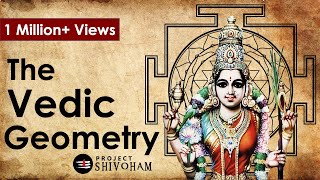
One of the world's oldest Geometrical Inventions are from India. 99% of the people today are not aware of this Scientific Hertiage of The Great Indian Subcontinent! Here are our 2 cents to bring this back to light!
The Data Present Here Is What Has Been Collected By THE JAIPUR DIALOGUES Over A Period Of Seven Years. This Data Has Been Termed As RULLS - RANDOM UNCEASING LOW-LEVEL SCATTERED VIOLENCE, Which Is Basically How Abrahamics, Especially Muslims Target Hindus. This Targeting Of Hindus Is Done Via Various Forms Of Jihad, Which Aren't Blatant Or Obvious But Happen On A Low Level, In The Most Horrific And Brutal Manner. The Number Of Atrocities Committed Against Hindus Is Rising Exponentially, And That Is An Alarming Situation. The RULLS Data Is An Indicative Updated List To Sensitize Our Fellow Hindus To Be Aware Of The Rising Crimes Perpetrated Against Them.
Ancient India made a significant contribution to the development of the modern world through its extensive knowledge traditions, which we now recognize as the Indian Knowledge Systems (IKS) or India's Knowledge Traditions through several programs run all across India. One such Faculty Development Programme (FDP) has been organised by IIT Kharagpur (NOV- DEC 2022), i.e., Bauddhika Atmanirbharta, with special reference to Science and Technology. The topic of this lecture is Chemistry in Ancient India: Sources and Texts, i.e, Rasayana Shastras. Where Prof V Ramanathan talks about philosophical grounding of Indian Science, Ayurvedic sources regarding chemistry, the treatises on chemistry such as Rasaratnasamuccaya, Rasarnava, Rasajalanidhi etc, and practical translations of texts through experiments.
Indian historical tradition reckons the chronology from Svāyambhuva Manu to the Mahābhārata era in terms of the elapsed number of Manvantaras and Mahāyugas (Chaturyugas). Unfortunately, those scholars who later updated the Purāṇas had erroneously deemed the increased calandrical duration of Chaturyugas as a given fact, and on that basis, narrated the chronological history of ancient India, resulting in, since antiquity, the loss of the true chronology from Manu to Mahabharata. The research found that the epoch of the end of the 28th Krita Yuga of the Vaivasvata Manvantara would be the strongest basis, if it is accurately established, to retrieve that lost chronology.
The Hindu way of life is mostly based on Vedic Science. As such, the outcome expected is a function of the knowledge of the practitioner. This talk will explain the science behind three of the most commonly practiced rituals: daily puja, abhisheka and homa.

Over many thousands of years, the brilliant celestial nightly displays over the unpolluted dark skies of ancient India led to astronomy becoming an integral part of the rhythm of life, paralleling the cosmic cycles, as ancient Indians sought to make sense of the skies, leading to building up of an enormous corpus of astronomy knowledge. In this talk, the speaker highlights several fascinating facts about ancient Indian astronomy, bringing to fore the deliberate distortions injected by Western agencies.
The grand narrative of India is the narrative of it's knowledge traditions. India has a continuous textual tradition which needs to be traced and built.